
Hiring someone to build your home is one of the biggest financial decisions you’ll make, and one of the most personal. You’re not just picking a contractor; you’re choosing the person who’ll turn a set of plans into the place where your life happens. That’s exactly why knowing the right questions to ask a custom home builder matters before you sign anything.
The problem is, most homeowners don’t know what they don’t know. Flashy portfolios and friendly handshakes can make every builder look great on the surface. But the details that actually determine whether your project stays on budget, on schedule, and true to your vision? Those come out during the interview, if you ask the right things. Skip this step, and you’re gambling with your timeline, your money, and your peace of mind.
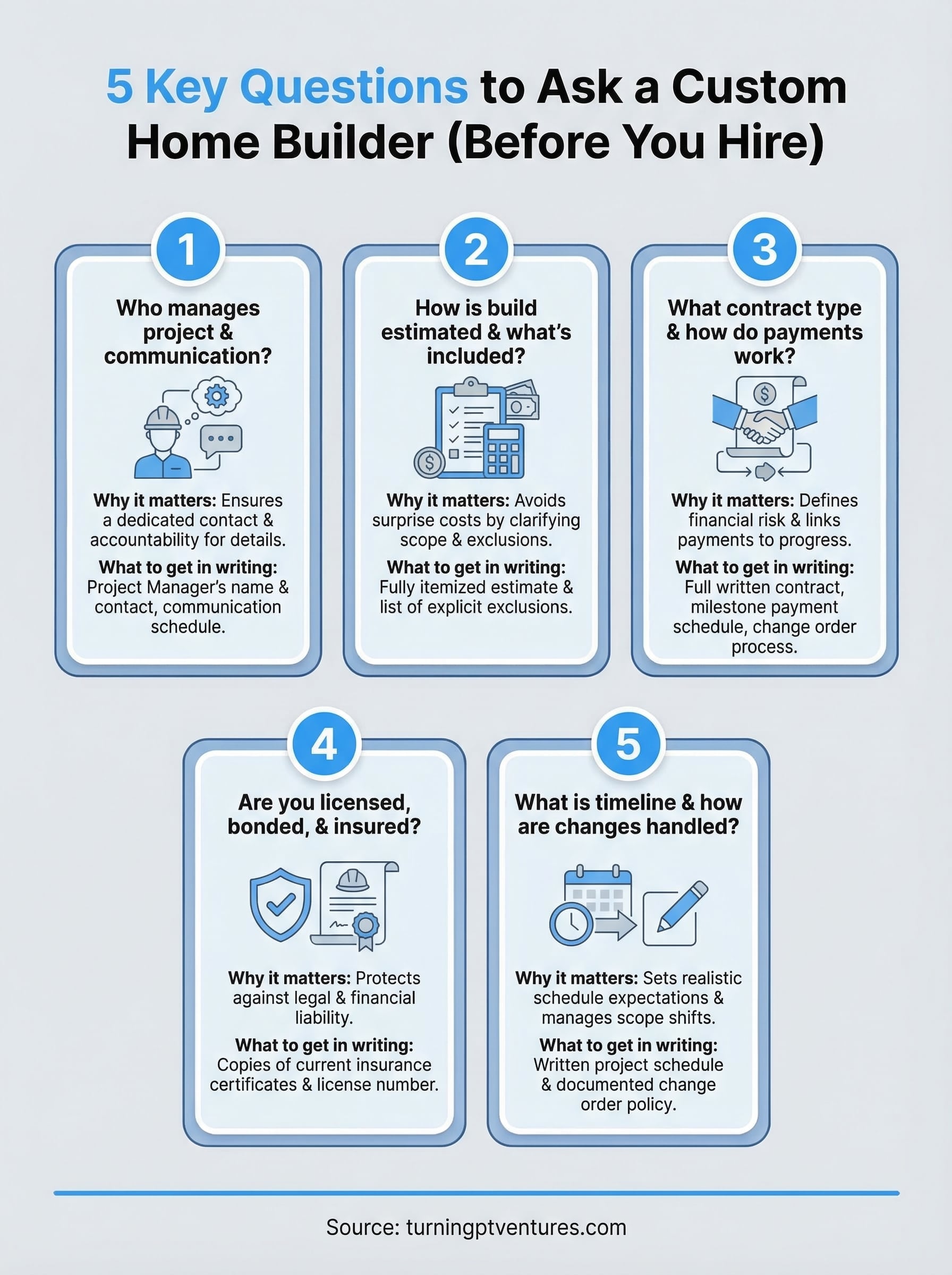
At Turning Point Ventures, we’ve managed enough custom builds across Western Washington to know what separates a smooth project from a painful one. Communication and transparency from day one make all the difference. Below, we’re sharing the five questions we believe every homeowner should ask before hiring a builder, along with what good answers actually look like.
1. Who will manage my project day to day and how will we communicate?
This is one of the most practical questions to ask a custom home builder, and it often gets skipped in favor of topics like design and finishes. The person you meet during the sales conversation is not always the person running your job site, and that gap creates real problems once the build starts.
Why this question matters
Custom home projects involve dozens of subcontractors, deliveries, inspections, and decisions happening at once. Without a dedicated point of contact, important details fall through the cracks. You need to know exactly who is accountable for your project every single day, not just when something goes wrong.
The builder you interview and the project manager who runs your build are often two different people. Know who is who before you sign.
What a solid answer sounds like
A strong builder will give you a specific person’s name and title, explain their role clearly, and describe how they keep clients informed. Look for these specifics in the answer:
- Structured weekly or biweekly client check-ins
- A direct phone or email line to your project manager
- A clear process for handling questions between updates
Red flags to watch for
Be cautious if the builder is vague about who oversees the work or says “you can always call us” without a real structure behind that statement. A builder juggling multiple large projects with no dedicated project manager signals that your build could easily get deprioritized when things get busy.
Follow-up questions to ask
- How many projects does your project manager currently oversee?
- What is your expected response time to client questions?
- Will I work with one consistent contact throughout the entire build?
What to get in writing
Ask for the project manager’s name and direct contact information included in your contract. Also request a documented communication schedule that spells out how often you’ll receive updates and through what channel, whether that’s email, phone calls, or a shared project tracking tool.
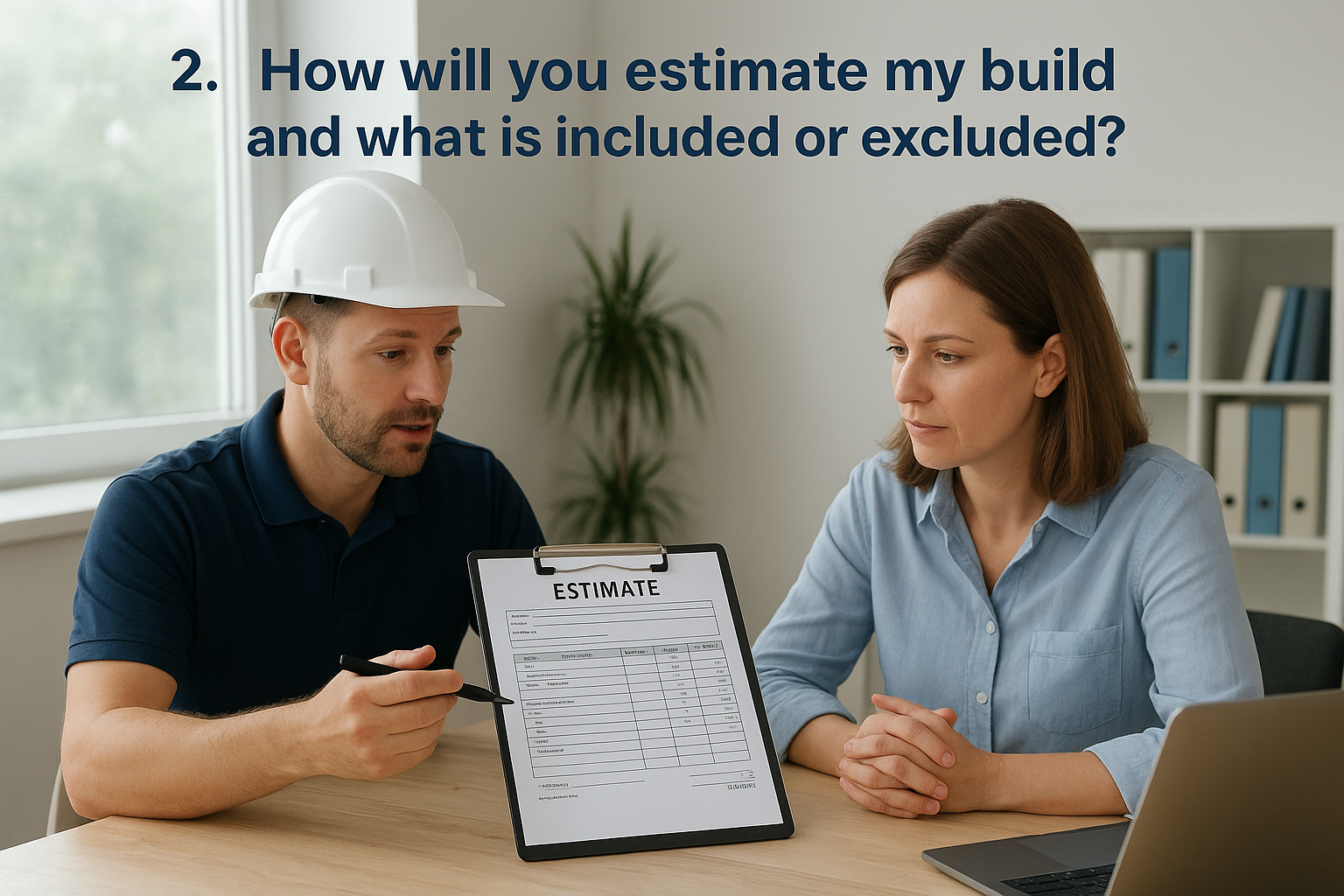
2. How will you estimate my build and what is included or excluded?
This is one of the most critical questions to ask a custom home builder, and it directly determines whether your final invoice matches the number you agreed to at the start. Estimates vary widely across builders, and the difference between a complete bid and a barebones one can be tens of thousands of dollars by the time you reach the finish line.
Why this question matters
A builder’s estimate is only useful if you understand what it actually covers. Some builders write detailed line-item estimates; others hand over a single number with minimal breakdown. Without clarity on inclusions and exclusions, you’re essentially evaluating bids on completely different scopes of work.
What a solid answer sounds like
Trustworthy builders will walk you through a detailed cost breakdown that separates labor, materials, permits, and subcontractor fees. They’ll also be upfront about what is not included, such as landscaping, appliances, or finish upgrades, so you can budget accurately from the start.
An estimate that excludes key line items isn’t a low bid; it’s an incomplete picture.
Red flags to watch for
Be skeptical of builders who offer a single lump-sum number without documentation. Vague estimates almost always lead to change orders that inflate your final cost well beyond what you expected.
Follow-up questions to ask
- What allowances are built in for fixtures and finishes?
- How do you handle material price increases mid-build?
What to get in writing
Request a fully itemized estimate that lists every cost category, along with a written list of explicit exclusions before you commit to anything.
3. What contract type do you use and how do payments work?
The contract structure defines your financial risk for the entire project. This is one of the essential questions to ask a custom home builder because payment schedules and contract types vary significantly from one builder to the next, and the wrong structure can leave you exposed.
Why this question matters
Your contract governs everything from how cost overruns are handled to when you’re required to hand over money. Signing without understanding the structure leaves you with little recourse when unexpected charges appear mid-build.
What a solid answer sounds like
Reputable builders typically use a fixed-price or cost-plus contract and tie payment milestones to verified construction progress, such as foundation completion or framing. They explain every term clearly before asking you to sign anything.
A payment schedule tied to construction milestones protects you far more than one based on calendar dates alone.
Red flags to watch for
Avoid any builder who demands large upfront payments before meaningful work begins or struggles to explain what triggers each payment. Vague contract language around scope changes is another warning sign worth taking seriously.
Follow-up questions to ask
- What percentage is due at each milestone?
- How are change orders priced and approved before work proceeds?
What to get in writing
Require a full written contract that names the contract type, lists every payment milestone tied to a specific build phase, and includes a documented process for approving and pricing any changes before work begins.
4. Are you licensed, bonded, and insured for my location?
Skipping this in your list of questions to ask a custom home builder is a costly mistake. Licensing requirements vary by state and county, so a builder who operates legally in one area may not be authorized in yours.
Why this question matters
Washington State requires general contractors to be licensed through the Department of Labor and Industries. Without proper credentials, your project may face stop-work orders, failed inspections, or personal liability if something goes wrong on site.
What a solid answer sounds like
A qualified builder will hand over their contractor license number, proof of general liability insurance, and workers’ compensation documentation without hesitation. They should also confirm their bonding status and name their provider.
Verifying insurance upfront protects you from out-of-pocket liability if a worker is injured on your property during the build.
Red flags to watch for
Watch for builders who cannot produce current certificates of insurance on request or claim that licensing does not apply to your project type. Uninsured or unlicensed contractors leave you exposed to financial and legal risk that no contract language can fully fix.
Follow-up questions to ask
- What is your Washington State contractor license number?
- Does your coverage extend to subcontractors working on my project?
What to get in writing
Request copies of all current insurance certificates and your builder’s license number before you sign anything. Verify the license independently through your state’s contractor licensing database.
5. What timeline should I expect and how will you handle changes?
This question belongs on every list of questions to ask a custom home builder because schedule slippage is one of the most common and costly surprises homeowners face during a build.
Why this question matters
Custom builds rarely finish ahead of schedule, and that is fine as long as your builder manages realistic expectations and communicates changes before they spiral. Without a clear schedule and a defined process for handling delays, your move-in date becomes a moving target with no accountability behind it.
What a solid answer sounds like
A prepared builder will give you a phased project timeline with milestones for permitting, site work, framing, mechanical rough-ins, and final finishes. They will also explain their change order process clearly, including how scope changes get priced, approved, and documented before any work shifts direction.
A builder who can walk you through each phase in detail is a builder who has done this before.
Red flags to watch for
Watch out for builders who offer a vague completion window or treat change orders casually without written approval steps. Both patterns signal poor schedule discipline and will cost you money.
Follow-up questions to ask
- How do weather or permit delays typically affect your schedules?
- What is your average turnaround time on change order approvals?
What to get in writing
Request a written project schedule with named milestones and a documented change order policy that requires your written approval before any scope or cost adjustments take effect.
Next steps
You now have the five most important questions to ask a custom home builder before any contract gets signed. Use them in every interview, and pay close attention to how each builder responds. Specific, confident answers with documentation to back them up are the sign of a builder worth trusting. Vague answers or resistance to putting things in writing are signs to walk away.
Building a custom home is a significant investment, and the right builder will make the process straightforward and transparent from the first conversation. They will give you a clear point of contact, a detailed estimate, a fair contract, proper credentials, and a realistic schedule with a defined process for managing changes.
If you are ready to talk through your project with a team that treats communication and accountability as the baseline, not the exception, explore what Turning Point Ventures can do for your build.


0 Comments