
A covered patio extends your living space beyond four walls, giving you a place to relax, entertain, or simply enjoy the outdoors without worrying about rain or harsh sun. Whether you’re drawn to sleek modern lines or rustic timber frames, the right covered patio design ideas can transform an underused backyard into your favorite spot at home.
At Turning Point Ventures, we’ve built and renovated outdoor living spaces throughout the Puget Sound area, and we’ve seen firsthand how a well-designed patio changes the way families use their property. The best designs balance aesthetics with functionality, creating spaces that look great and actually get used year-round, even in Western Washington’s unpredictable weather.
This guide covers a range of styles, layouts, and materials to help you find direction for your project. From high-end custom builds to practical budget-friendly options, you’ll find inspiration and expert recommendations to plan a covered patio that fits your home and lifestyle.
Why a covered patio is worth building
You gain a functional extension of your home when you build a covered patio, not just extra square footage on paper. The shelter creates a buffer zone between your indoor living areas and the yard, giving you a place to transition between spaces without losing comfort. In Western Washington, where rain can last for days and summer sun breaks through unpredictably, that protected outdoor space becomes one of the most-used areas of your property.
Protection from Pacific Northwest weather
A roof over your patio shields you from rain and direct sunlight, which means you can host a dinner party during a light drizzle or read a book on a hot August afternoon without squinting or sweating. The cover also protects your furniture and decor from the elements, so you don’t need to drag cushions inside every time the forecast changes. We’ve seen clients who initially hesitated on the investment realize within weeks that their covered patio gets more daily use than their formal living room.
Your outdoor furniture lasts years longer under a solid cover because moisture and UV exposure are the two main culprits that fade fabrics and warp wooden frames. The structure also keeps fallen leaves, branches, and debris off your seating areas, which means less cleaning and more time actually enjoying the space.
A covered patio turns unpredictable Pacific Northwest weather into a non-issue, letting you use your outdoor space on your terms instead of waiting for perfect conditions.
Year-round usable space that adds value
When you add a covered patio, you create livable square footage that functions across all four seasons, not just during the brief summer months. Buyers in the Puget Sound area specifically look for homes with outdoor living features, and a well-built covered patio checks that box while standing out from properties that only offer an exposed deck or concrete slab. Real estate agents consistently tell us that homes with thoughtful outdoor spaces sell faster and command higher prices.
The return on investment goes beyond resale value. You get immediate lifestyle benefits the moment construction wraps, from morning coffee in the fresh air to evening gatherings that don’t require you to relocate everyone indoors when the temperature drops. Many of our clients find they use their covered patio more than they initially expected, which makes the project feel like one of the best decisions they made for their home.
Lower maintenance than indoor rooms
A covered patio requires less upkeep than a fully enclosed addition because you’re working with durable exterior materials from the start. You won’t deal with drywall repairs, interior paint touch-ups, or HVAC adjustments. The structure needs occasional cleaning and inspection, but the materials we typically use (like powder-coated aluminum, treated lumber, or composite decking) hold up to weather exposure without constant attention.
The simplified maintenance extends to the furnishings too. You can choose outdoor-rated pieces that don’t require the careful treatment indoor furniture demands, and spills or tracked-in dirt become minor inconveniences instead of emergencies. Exploring different covered patio design ideas during your planning phase helps you select materials and finishes that match your maintenance preferences, whether you want zero-fuss composites or the natural aging of wood and stone.
How to plan a covered patio that fits your home
Planning starts with understanding how you’ll actually use the space and what constraints your property presents. You need to consider site conditions, local building codes, and your budget before you settle on a design, because those factors will shape every decision that follows. The best covered patio design ideas work because they match the homeowner’s lifestyle and integrate naturally with the existing structure, rather than fighting against the home’s architecture or the yard’s layout.
Assess your property’s layout and sun patterns
Walk your yard at different times of day to see where sun and shade fall throughout the seasons. Western Washington gets low-angle winter sun that behaves differently than summer light, and you want to position your covered patio where it captures or blocks sunlight based on your priorities. If you host evening gatherings, you might prioritize western exposure for sunset views, but that same orientation could make afternoon use uncomfortable during July and August.
Check the slope and drainage around your proposed patio location, because water needs somewhere to go when it runs off the roof. We’ve fixed several patios that were built in low spots where water pooled, and those repairs always cost more than planning proper drainage from the start. Look at your home’s existing roofline and window placement too, since the patio cover should complement those features rather than block natural light from interior rooms.
The right location solves half your design challenges before you choose a single material or style.
Set a realistic budget and timeline
A covered patio typically costs between $15,000 and $50,000 depending on size, materials, and complexity, with high-end custom designs reaching well beyond that range. You get better value when you prioritize the structural elements first, like a solid foundation and weather-resistant framing, then add refinements like built-in lighting or premium decking as your budget allows. Breaking the project into phases lets you spread costs over time without compromising the core structure.
Construction usually takes four to eight weeks from permit approval to completion, though timelines stretch when you add custom features or face weather delays. Plan your project for late spring or summer when weather cooperates and contractor schedules open up, or accept that fall and winter builds may take longer.
Check local codes and permits first
Your city or county likely requires permits for covered patio construction, and those regulations dictate setbacks from property lines, maximum square footage, and structural requirements. We pull permits for every project because inspections catch potential problems early and protect your investment if you ever sell the home. Some jurisdictions also limit how close you can build to septic systems or wetlands, which can shift your entire layout.
Patio cover styles and structure options
The structure you choose shapes how your covered patio looks and performs, and different styles handle Western Washington weather with varying degrees of protection. Your decision here affects everything from water drainage to how much natural light reaches the space, so you want to pick a design that matches your functional needs before you worry about aesthetics. Exploring various covered patio design ideas helps you understand which structural approach works best for your property and budget.
Gable and hip roof designs
A gable roof features two sloping sides that meet at a central ridge, creating a triangular profile that sheds rain efficiently and provides full overhead protection. This style works well when you want maximum weather coverage and don’t mind the more traditional appearance that comes with a peaked roofline. Gable roofs also give you ceiling height flexibility, so you can add fans, lighting, or even a vaulted interior if you want the space to feel more open.
Hip roofs slope on all four sides instead of just two, which creates a lower profile that often blends better with ranch-style homes or properties where you don’t want the patio cover to dominate the view from inside. The construction requires more complex framing, which typically increases labor costs, but the result looks polished and handles wind better than a gable design.
Pergolas and open-beam structures
Pergolas offer partial shade through spaced beams or lattice work rather than solid roofing, giving you a lighter aesthetic that still defines the outdoor space. You get filtered sunlight during the day and can train climbing plants over the beams for additional coverage, though this approach won’t protect you from rain. Many homeowners combine pergolas with retractable fabric panels or clear polycarbonate inserts between the beams to add weather protection without losing the open feel.
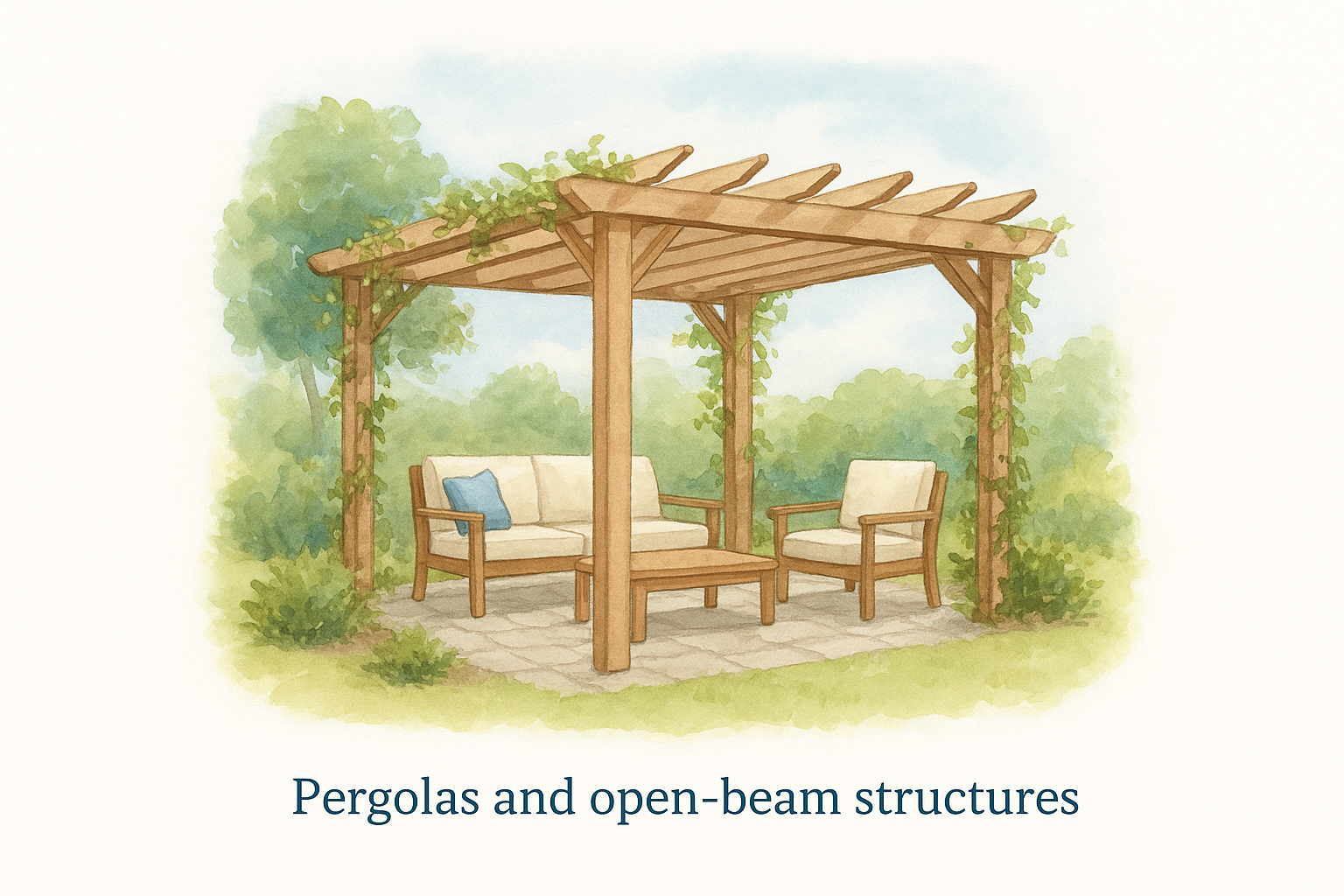
The open-beam style costs less to build than a fully enclosed roof because you need fewer structural supports and simpler connections to the house. This option makes sense when you prioritize views and natural light over complete weather protection, or when you plan to use the space primarily during dry months.
A pergola transforms your patio into a garden room, while a solid roof creates an outdoor living room that works in any weather.
Attached vs freestanding layouts
An attached cover connects directly to your home’s exterior wall and shares the existing structure for support, which simplifies construction and creates a seamless transition between indoor and outdoor spaces. You typically need to flash the connection point properly to prevent water intrusion, but the integrated design often looks more intentional than a standalone structure sitting in the yard.
Freestanding covers stand independently with their own posts and foundation, giving you placement flexibility when your ideal patio location sits away from the house. This approach works well for creating separate zones in larger yards or when your home’s roofline makes attachment complicated.
Materials that hold up to weather and daily use
Your material choices determine how your covered patio performs over decades of Pacific Northwest weather, and the wrong selections lead to constant maintenance headaches or premature replacement costs. You want materials that handle rain, temperature swings, and UV exposure without warping, fading, or developing structural problems. The best covered patio design ideas balance durability with appearance, recognizing that even beautiful materials fail when they can’t stand up to daily use and seasonal moisture.
Roofing materials for weather protection
Metal roofing delivers the longest lifespan and best rain protection, with standing seam or corrugated panels that shed water instantly and resist moss growth. You can choose from painted steel or aluminum finishes that match your home’s exterior, and the material typically lasts 40 to 50 years with minimal maintenance. The main drawback is noise during heavy rain, though adding insulation between the metal and ceiling frame reduces that drumming sound significantly.
Composite shingles cost less upfront and blend seamlessly when your covered patio attaches to a home with existing shingle roofing. They handle Western Washington weather reliably for 20 to 30 years but require periodic inspection for moss and occasional cleaning to maintain appearance. Clear polycarbonate panels work well for pergola-style covers when you want weather protection without blocking natural light, though they scratch more easily than solid roofing and need replacement every 10 to 15 years.
The roofing material you choose sets the tone for your entire patio’s durability and determines how much maintenance you’ll face over the next two decades.
Decking and flooring that handles moisture
Composite decking resists rot, splinters, and fading while requiring almost no maintenance beyond occasional washing. The material costs more than pressure-treated lumber initially but saves money over its lifespan because you never need to stain or seal it. We’ve installed composite decking that still looks new after ten years of continuous exposure to rain and foot traffic.
Concrete provides a low-maintenance, permanent surface that works particularly well for patios with outdoor kitchens or heavy furniture. You can finish it with stamped patterns, stains, or exposed aggregate to add visual interest beyond basic gray slabs. Natural stone pavers create an upscale look and handle freeze-thaw cycles better than poured concrete, though the installation requires more labor and the joints need periodic re-sanding to prevent weed growth.
Structural framing that won’t fail
Pressure-treated lumber remains the most common framing choice because it resists rot and insects while staying affordable for larger builds. Posts and beams need proper flashing and drainage details where they connect to the house or contact the ground, but the material performs reliably for decades when installed correctly. Engineered lumber products like laminated veneer beams span longer distances without sagging and resist warping better than solid wood, making them worth considering for wider patio covers where you want fewer support posts interrupting the space.
Layout ideas and features that make it livable
The physical layout determines whether your covered patio becomes a space you use daily or an empty platform that collects dust. You need to think about traffic flow, furniture placement, and specific activities you want to accommodate, because a well-planned layout makes the difference between a patio that feels cramped or awkward and one that naturally draws people in. Smart covered patio design ideas incorporate zones for different functions and built-in features that eliminate the need to constantly move things in and out of storage.
Functional zones that serve different activities
Creating distinct areas within your covered patio lets you host multiple activities simultaneously without one disrupting the other. You might position a dining table near the house entrance for easy food service, then place lounge seating at the opposite end where conversations stay separate from meal prep. A small bar or beverage station between the two zones acts as a natural divider while keeping drinks accessible to both areas.
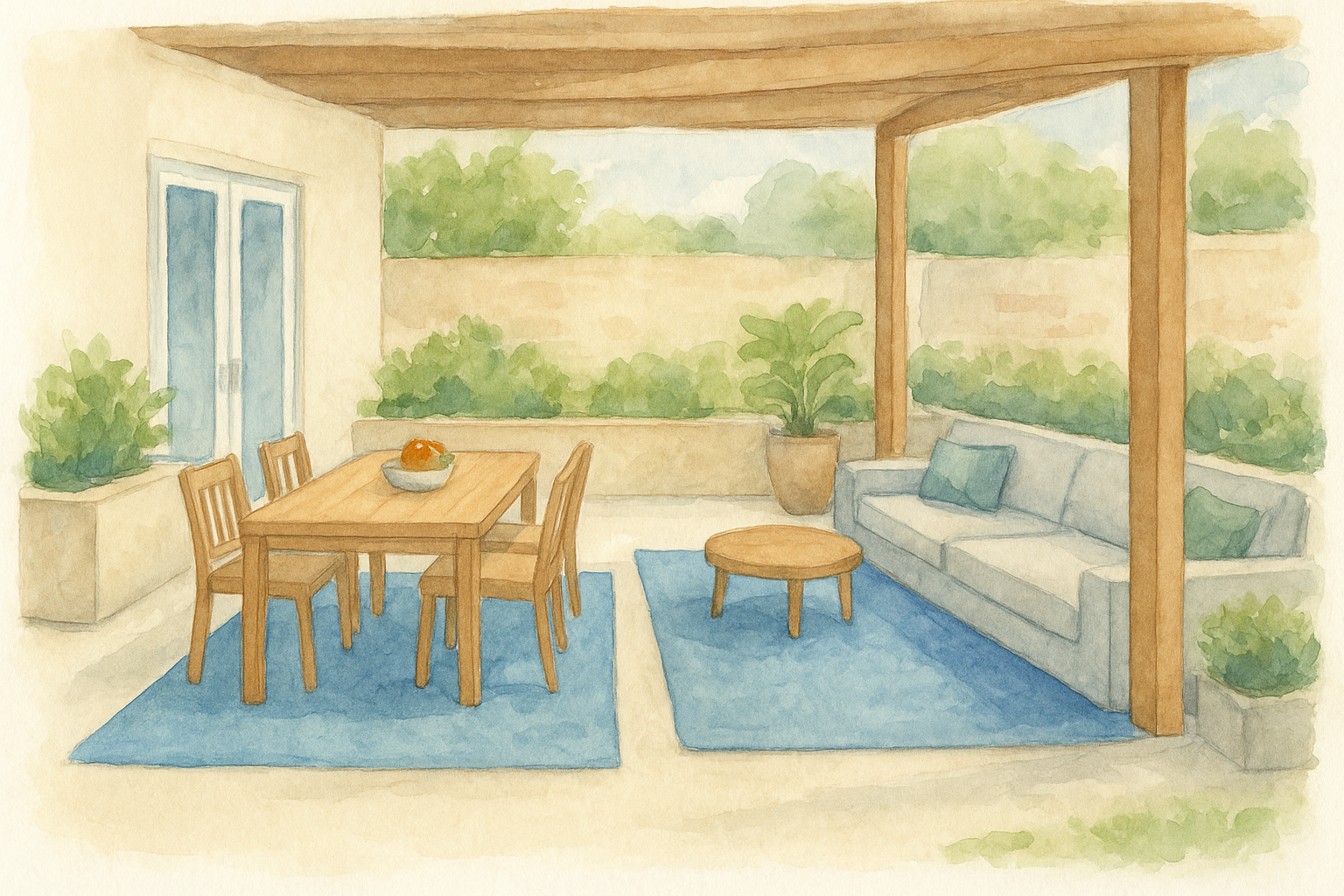
The zones don’t require physical barriers. You can define spaces through furniture arrangement, area rugs, or overhead changes like dropping the ceiling height over a specific section. We’ve built patios where a subtle step down creates a sunken lounge area that feels intimate without walls blocking sightlines across the space.
Built-in features that maximize convenience
Permanent elements like built-in benches, planters, or storage cabinets make your patio more functional while reducing furniture clutter. A bench with lift-top storage underneath gives you seating plus a place to stash cushions and outdoor games, and the fixed installation means you never need to rearrange pieces to optimize the layout. Built-in counters with weatherproof cabinetry below create prep space for outdoor cooking without requiring you to wheel a cart back and forth from the kitchen.
Built-in features turn your covered patio from a furnished outdoor space into a true extension of your home with dedicated purpose for every element.
Electrical outlets and water connections installed during construction cost far less than adding them later, and they unlock capabilities you might not consider without infrastructure in place. A hose bib on the patio lets you water hanging plants without dragging hoses from the side yard, while strategically placed outlets support everything from string lights to outdoor speakers.
Lighting and heating for extended use
Layered lighting extends your patio’s usable hours well beyond sunset and creates ambiance that shifts with activities. You want overhead fixtures on dimmers for general illumination during dinner parties, plus accent lights that highlight architectural features or plantings when you only need mood lighting. We install separate circuits so you can control different zones independently, giving you flexibility to light the dining area while keeping lounge seating dim for evening relaxation.
Heating elements like infrared panels or a gas fire pit make your covered patio comfortable during cool Western Washington evenings from September through May. Portable heaters work but take up floor space and require storage, while built-in systems integrate cleanly into your design.
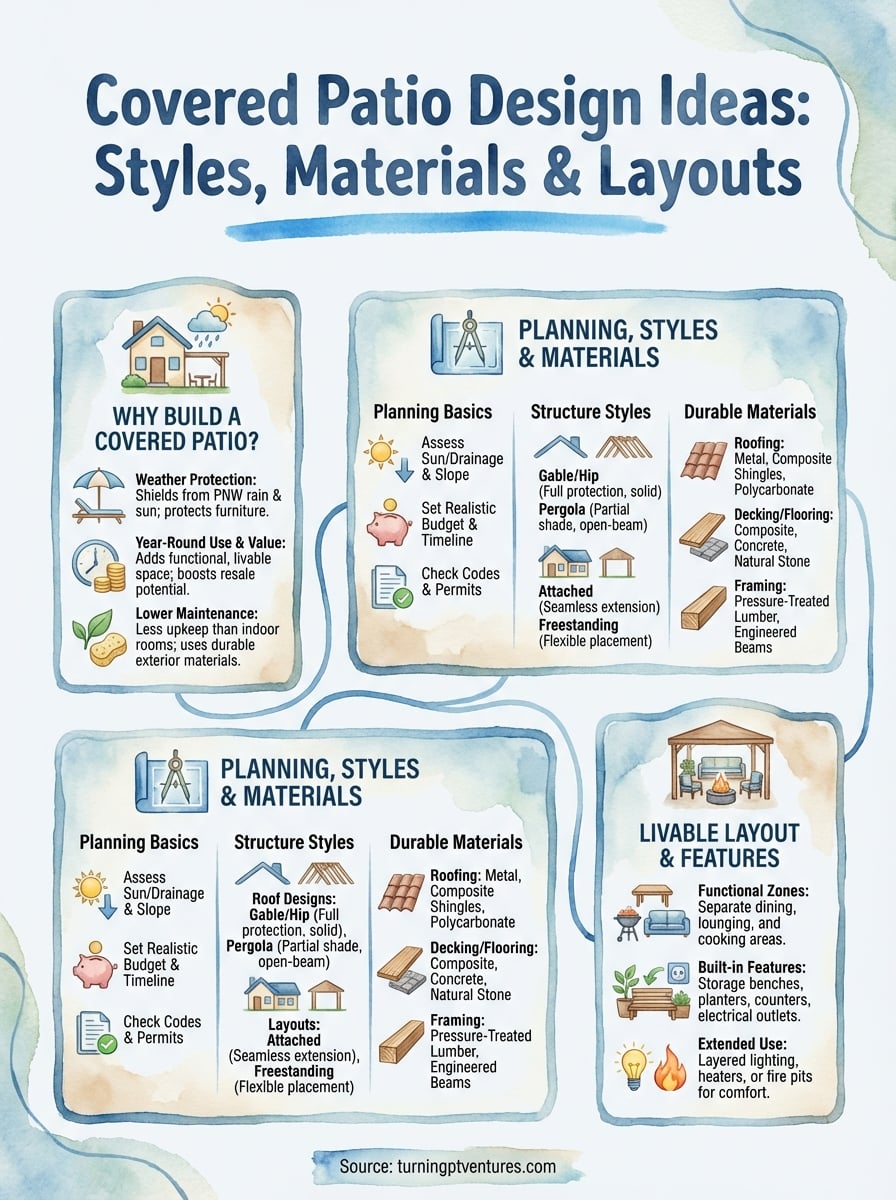
Next steps for your patio plan
You’ve explored styles, materials, and layouts that shape successful covered patio projects, and now you need to move from ideas to action. Start by measuring your available space and noting any existing conditions that affect placement, like drainage patterns or proximity to utilities. Take photos of your home’s exterior from multiple angles so you can visualize how different covered patio design ideas integrate with your current architecture. Walk through your yard during different times of day to understand how sun exposure and wind patterns affect comfort in potential locations.
Creating a realistic budget helps you prioritize features and avoid scope creep during construction. List your must-have elements separately from nice-to-have additions, then research material costs and permit fees in your area to establish baseline numbers.
Schedule consultations with experienced contractors who specialize in outdoor living spaces rather than general handymen. Professional guidance catches problems during planning when solutions cost less than fixes during construction. Turning Point Ventures has built covered patios throughout Western Washington for over a decade, and we help homeowners develop plans that match their vision while staying grounded in practical execution.


0 Comments