
Planning a kitchen renovation without knowing what it might cost is like grocery shopping without checking prices, you could end up with a serious case of sticker shock at checkout. A kitchen remodel cost calculator gives you a realistic starting point, helping you understand where your money will go before you commit to contractors or materials. Whether you’re updating cabinets or gutting the entire space, having a budget framework changes everything.
At Turning Point Ventures, we guide homeowners throughout the Puget Sound area through exactly this process. As a full-service general contractor specializing in residential renovations, we’ve seen firsthand how accurate cost estimates prevent mid-project surprises and keep remodels on track.
This guide walks you through how to estimate your kitchen remodel budget step by step. You’ll learn which factors drive costs up or down, how to use calculator tools effectively, and what realistic numbers look like for different project scopes in 2026.
What a kitchen remodel cost calculator includes
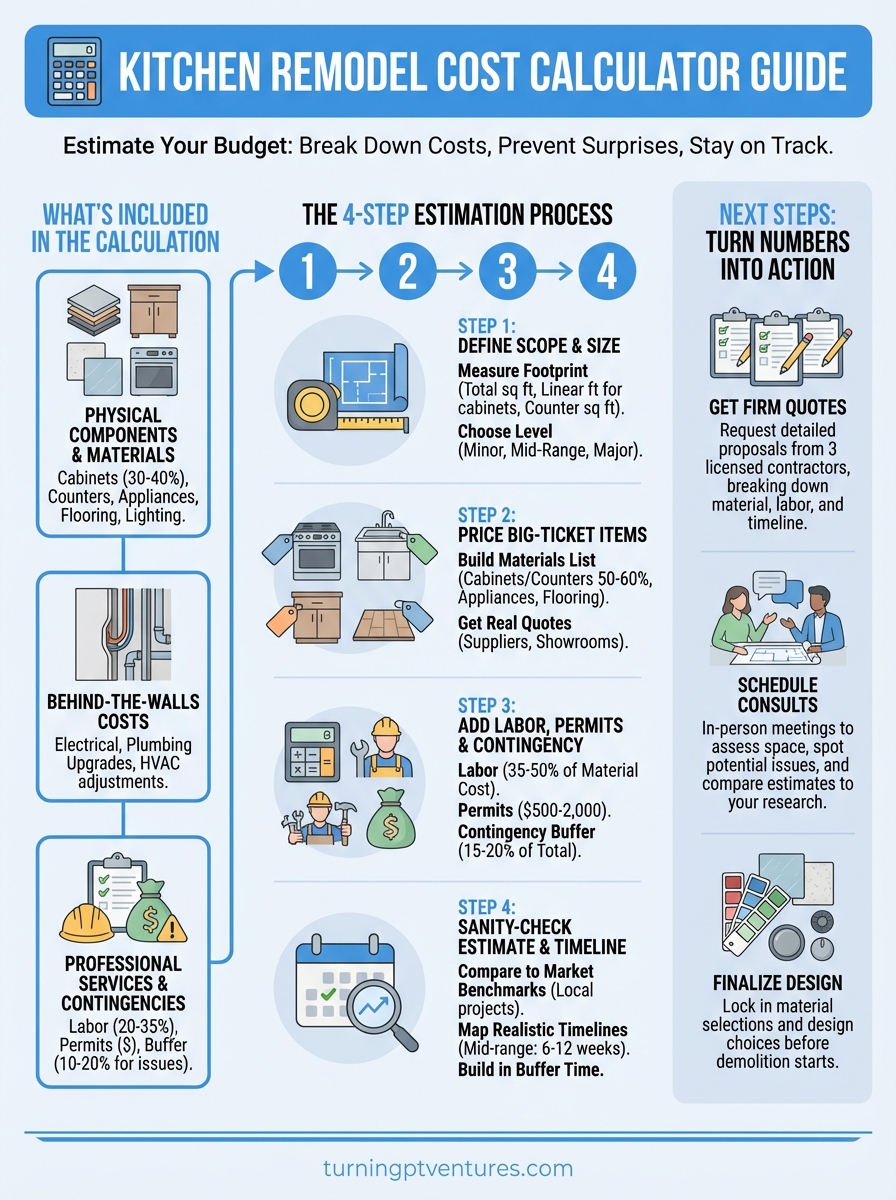
A kitchen remodel cost calculator breaks your project into measurable categories so you can assign realistic dollar amounts to each component. Most calculators factor in square footage, cabinet type, countertop material, appliances, flooring, and labor costs. You input your specific choices, and the tool generates an estimated total based on industry averages and regional pricing.
Physical components and materials
The calculator typically starts with visible elements like cabinets, which often account for 30-40% of your total budget. You’ll select between stock, semi-custom, or custom options, each carrying different price points. Countertop materials follow next, ranging from laminate at $20-50 per square foot to quartz at $75-150 per square foot. Appliances get their own category, flooring options include tile, hardwood, or vinyl, and lighting fixtures round out the material section.

The most accurate calculators let you adjust quality levels within each category rather than forcing you into preset tiers.
Behind-the-walls costs
Your kitchen remodel cost calculator should account for infrastructure updates that don’t show but cost real money. Electrical work might include adding circuits for new appliances or relocating outlets. Plumbing modifications come into play if you’re moving your sink or dishwasher. HVAC adjustments may be necessary if you’re changing the layout or adding a range hood that requires new ductwork.
Professional services and contingencies
Labor typically represents 20-35% of total costs and covers contractor fees, installation crews, and project management. Most calculators build in a 10-20% contingency buffer for unexpected issues like water damage behind old cabinets or outdated wiring that needs replacement. Permit fees vary by location but usually run $200-1,500 depending on project scope.
Step 1. Define your scope and kitchen size
Before you enter numbers into any kitchen remodel cost calculator, you need to establish two foundational pieces of information: how many square feet you’re working with and what level of renovation you’re pursuing. These inputs directly affect every downstream calculation, from material quantities to labor hours. Measure wrong or pick the wrong scope category, and your estimate will be off by thousands of dollars.
Measure your kitchen footprint
Start by measuring the total floor area of your kitchen in square feet. Multiply length times width for rectangular spaces, or break irregular layouts into sections and add them together. You also need linear footage of your wall cabinets and base cabinets, measure each wall where cabinets will go and sum the totals. Countertop square footage requires measuring the depth and length of counter runs, including islands or peninsulas.
Most calculators use kitchen size as the primary multiplier, so accurate measurements prevent budget creep later.
Choose your remodel level
Calculators typically offer three scope categories that determine which elements you’ll replace. A minor remodel keeps your existing layout but updates finishes like countertops, backsplash, and appliances ($15,000-30,000 for an average kitchen). A mid-range remodel replaces cabinets, counters, flooring, and some appliances while maintaining the basic footprint ($30,000-60,000). Major remodels involve moving walls, relocating plumbing, installing custom cabinets, and upgrading everything ($60,000+).
Step 2. Price the big-ticket line items
Once you know your square footage and scope, you can start assigning actual dollar amounts to the major components that drive your total cost. Your kitchen remodel cost calculator should break these into separate line items rather than lumping everything together. Start with cabinets and countertops, which combined often represent 50-60% of your material budget, then move through appliances, flooring, and fixtures.
Build your materials list
List every major item you plan to replace with specific quantity measurements. For cabinets, count how many linear feet of base units and wall units you need. Countertops require square footage including overhang and backsplash height. Note appliance dimensions for your range, refrigerator, dishwasher, and microwave. Calculate flooring square footage with a 10% waste factor built in.

| Item Category | Measurement Needed | Budget Range (2026) |
|---|---|---|
| Stock cabinets | Linear feet | $100-300/ft |
| Quartz counters | Square feet | $75-150/sq ft |
| Appliances | Per unit | $400-3,000 each |
| Tile flooring | Square feet | $8-25/sq ft installed |
Research current prices
Visit supplier websites or local showrooms to get real quotes rather than relying solely on calculator averages. Cabinet manufacturers often provide free estimates if you submit your measurements. Appliance retailers list current pricing online, and flooring stores calculate installation costs per square foot based on your specific material choice.
Prices fluctuate based on regional availability and seasonal demand, so get quotes within 30 days of your planned start date.
Step 3. Add labor, permits, and contingency
Your materials list represents only half the budget picture. Labor, permits, and unexpected issues make up the remaining costs that many homeowners underestimate when using a kitchen remodel cost calculator. Professional installation typically runs 30-50% of your total material costs, while permits add another layer depending on your local jurisdiction. Add these numbers now rather than scrambling to find extra funds mid-project.
Calculate labor costs
Contact three licensed contractors for written estimates based on your specific scope. Labor charges vary by region, complexity, and contractor experience, but you can estimate using industry multipliers. Multiply your total material costs by 0.35 to 0.50 for a ballpark labor figure. For example, if materials total $40,000, labor will likely run $14,000-20,000.
Factor in permits and inspections
Your municipality requires building permits for most kitchen remodels involving electrical, plumbing, or structural changes. Call your local building department to get exact permit fees for your project scope. Budget $500-2,000 depending on work complexity. Inspections happen at multiple phases, and failed inspections mean rework costs.
Permits protect you legally and ensure work meets code, even though they add upfront expense.
Build in contingency buffer
Set aside 15-20% of your total estimate for surprises like hidden water damage, outdated wiring, or design changes. Calculate this by multiplying your combined material and labor total by 0.15. This buffer keeps your project moving when contractors discover issues behind walls or you decide to upgrade finishes mid-stream.
Step 4. Sanity-check your estimate and timeline
Your kitchen remodel cost calculator gives you numbers, but those numbers need reality testing against actual market conditions and project timelines. Compare your total against recent remodel costs in your area and verify that your projected schedule aligns with typical construction phases. This step catches unrealistic expectations before you sign contracts or clear out your kitchen.
Compare against market benchmarks
Pull up three recent kitchen remodels in your neighborhood with similar square footage and scope. Ask neighbors, check local contractor portfolios, or search permit records through your city’s building department website. Your estimate should fall within 15-20% of comparable projects. If your number sits significantly lower, you probably missed line items or underestimated labor. Higher estimates might mean you’re overbuilding for your market.
Kitchen remodel cost calculator results mean nothing if they don’t match what contractors actually charge in your zip code.
Map out project duration
Calculate realistic timeframes for each phase: demolition takes 1-3 days, rough-in work needs 1-2 weeks, cabinet installation requires 2-5 days, and countertop fabrication adds 2-3 weeks to your schedule. Add these up and build in buffer time between phases for inspections and material delivery delays. A typical mid-range kitchen remodel runs 6-12 weeks from start to finish.
Next steps
Your kitchen remodel cost calculator gives you a solid budget framework, but spreadsheets and estimates only take you so far. The next move is finding a contractor who can turn your numbers into actual construction drawings and firm quotes. Request detailed proposals from at least three licensed general contractors, making sure each bid breaks down materials, labor, and timeline separately.
Schedule in-person consultations where contractors can assess your space and spot potential issues that affect pricing. Bring your calculator results to these meetings so you can compare their estimates against your research. This conversation reveals whether your budget aligns with market reality or needs adjustment.
Once you’ve selected a contractor, finalize your design choices and lock in material selections before demolition starts. Turning Point Ventures helps Puget Sound area homeowners navigate this entire process, from budget planning through project completion, so you can focus on your daily life while we handle the construction complexities.


0 Comments