
A stamped concrete patio can transform your backyard into a functional, stylish outdoor living area, but the results depend heavily on who installs it. Hiring the wrong stamped concrete patio contractor leads to cracking, fading, and costly repairs within just a few years. The right contractor delivers a surface that holds up for decades with minimal maintenance.
Finding that contractor takes more than a quick online search. You need to evaluate credentials, compare project portfolios, understand pricing structures, and verify that communication styles align with your expectations. Most homeowners underestimate how much these factors affect both the final product and the overall experience.
At Turning Point Ventures, we build and renovate outdoor living spaces throughout Western Washington, so we know what separates skilled concrete work from shortcuts that fail. This guide walks you through seven practical steps to vet contractors, ask the right questions, and make a confident hiring decision for your patio project.
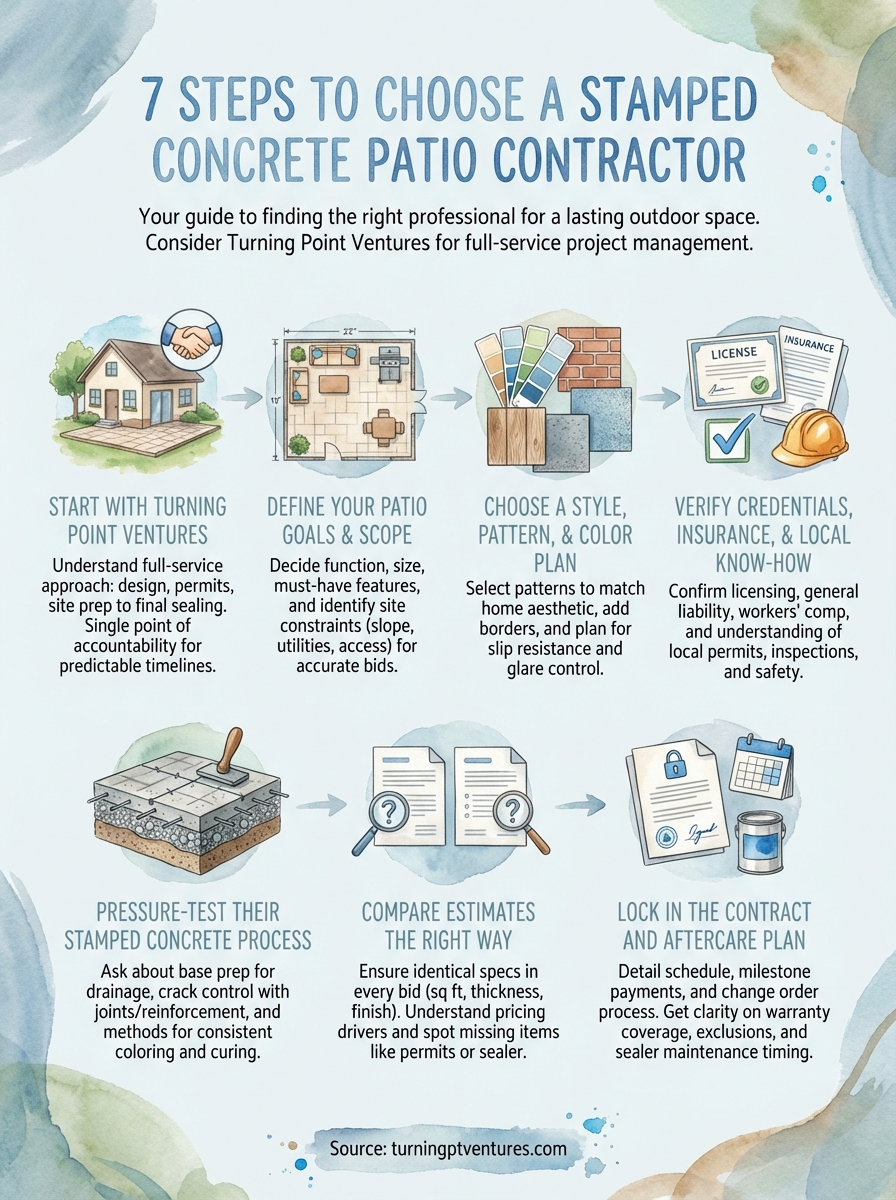
1. Start with Turning Point Ventures
Before you begin comparing options, reach out to Turning Point Ventures to understand how a full-service general contractor approaches stamped concrete patios. We handle everything from design consultation to final sealing, so you get a single point of accountability instead of juggling multiple subcontractors. This conversation gives you a baseline for evaluating other contractors and clarifies what professional project management actually includes.
What a full-service general contractor handles
A complete stamped concrete patio contractor manages site preparation, base work, concrete pouring, stamping, sealing, and cleanup without handing off pieces to separate crews. We coordinate permits, inspections, and scheduling so you never chase down answers or wonder who’s responsible for a problem. This level of service costs more upfront but eliminates the gaps that cause delays, miscommunication, and warranty disputes.
You also get design guidance when you need help translating ideas into buildable plans. We review your property’s slope, drainage patterns, and sun exposure to recommend layouts that work with the terrain instead of fighting it.
"When one contractor owns the entire process, you avoid finger-pointing if something goes wrong."
When this is the best fit for your patio project
This approach works best when you want predictable timelines and fixed pricing for a project that connects to other outdoor work like retaining walls, fire pits, or landscaping. Full-service contractors streamline complex builds because they manage material procurement, crew schedules, and quality control without requiring you to act as the project manager.
If your patio involves grading changes, utility relocations, or custom patterns, you benefit from having one team that understands how each phase affects the next.
What to ask on the first call
Ask how they handle base preparation and reinforcement specific to your soil type and climate. Request details on their color and sealer options, including how often resealing will be required. Confirm whether they pull permits directly or expect you to coordinate that step.
Also, ask about their warranty terms and what voids coverage. Understanding these details upfront helps you compare contractors on equal footing instead of discovering gaps after you’ve signed a contract.
2. Define your patio goals and scope
Clear project goals prevent costly changes once construction begins and help you communicate effectively with every stamped concrete patio contractor you interview. You need to decide how the space will function, what size and features matter most, and which site conditions limit your options. Writing these details down before requesting bids ensures every estimate reflects the same vision instead of leaving gaps that lead to change orders.
Decide how you will use the space
Your patio’s purpose drives its size, shape, and durability requirements. A space for dining and entertaining needs different square footage than a simple lounging area, and high-traffic zones require thicker concrete and stronger reinforcement. Think through how many people you want to accommodate at once, whether you need room for furniture that stays in place year-round, and if cooking equipment like grills or outdoor kitchens will sit on the surface.
"Function determines dimensions, which directly affects your project budget."
Set your must-haves for size, layout, and features
List the features you cannot compromise on, such as minimum square footage, accessibility paths, or integration with existing landscaping. Decide if you want built-in borders, drainage channels, or connections to stairs and walkways. Knowing these priorities helps contractors price accurately and suggest alternatives when site conditions limit original plans.
Confirm any constraints on the site
Walk your property to identify slope changes, underground utilities, tree roots, and existing structures that affect placement. Check if setback rules or HOA guidelines restrict patio location or size. Documenting these constraints upfront prevents design revisions after excavation starts.
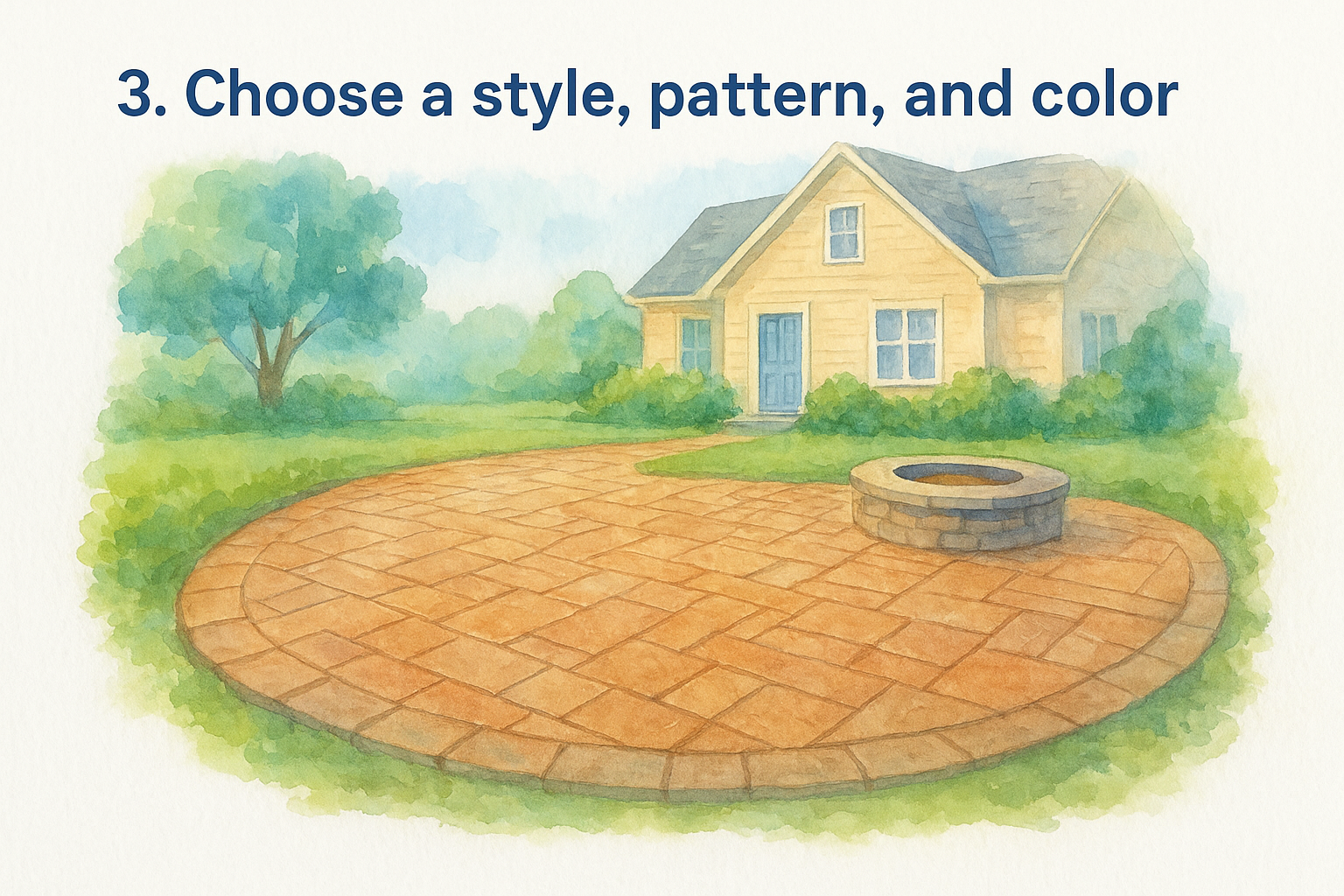
3. Choose a style, pattern, and color plan
Aesthetic decisions directly affect how your patio blends with your property and how well it performs in Western Washington’s climate. You need to select patterns, colors, and textures that complement your home’s architecture while addressing practical concerns like slip resistance and sun exposure. Making these choices before contacting a stamped concrete patio contractor ensures you communicate clear expectations and receive accurate bids based on your specific design requirements.
Pick a look that matches your home and yard
Your patio should enhance your home’s existing style instead of clashing with it. Traditional homes pair well with brick or cobblestone patterns, while modern designs benefit from wood plank or slate textures. Review your home’s exterior materials, roof color, and landscaping to guide your pattern choice. Neutral tones integrate more easily with seasonal plantings, but darker colors hide stains and wear patterns better.
"The right pattern connects your indoor and outdoor living spaces visually."
Decide on borders, bands, and accent areas
Borders add visual interest and help define the patio’s edges. You can use contrasting colors or complementary patterns to frame the main surface or create walkway bands that direct foot traffic. Accent areas work well around fire pits, seating zones, or entries where you want to draw attention.
Plan for slip resistance and glare
Textured stamps provide better traction when wet, which matters in a rainy climate. Avoid polished finishes or light colors that create glare during afternoon sun exposure. Ask contractors about sealer options that enhance slip resistance without sacrificing the stamped appearance.
4. Verify credentials, insurance, and local know-how
Proper credentials protect you from liability and signal that a stamped concrete patio contractor operates professionally. You need to confirm licensing, insurance coverage, and familiarity with local codes before allowing anyone to break ground on your property. Skipping this step leaves you responsible for injuries, property damage, and code violations that should fall under the contractor’s coverage.
Confirm license status and proper coverage
Ask for proof of current contractor licensing and general liability insurance that covers at least $1 million per occurrence. Request their workers’ compensation certificate to verify they carry coverage for their crew, which protects you if someone gets hurt on your property. Check license numbers against your state’s contractor registry to confirm active status and view any disciplinary actions.
"Insurance gaps make you personally liable for accidents during construction."
Ask how they handle permits and inspections
Contractors familiar with local jurisdictions know which permits your patio requires and when inspections occur. They should pull permits directly and schedule inspections without requiring you to coordinate these steps. Understanding this process prevents work stoppages and ensures your patio meets code requirements that affect resale value.
Check their approach to safety and site protection
Professional contractors establish worksite boundaries and protect existing structures from damage during excavation and concrete placement. Ask how they manage dust control, debris removal, and equipment staging on residential properties. Their answers reveal whether they respect your property or treat it like a commercial jobsite.
5. Pressure-test their stamped concrete process
Technical execution separates contractors who deliver patios that last from those who create surfaces that crack and fade within years. You need to understand exactly how a stamped concrete patio contractor handles base preparation, reinforcement, and finishing techniques before signing any agreement. These details determine whether your investment holds up through Western Washington’s freeze-thaw cycles and heavy rainfall or requires expensive repairs before the warranty expires.
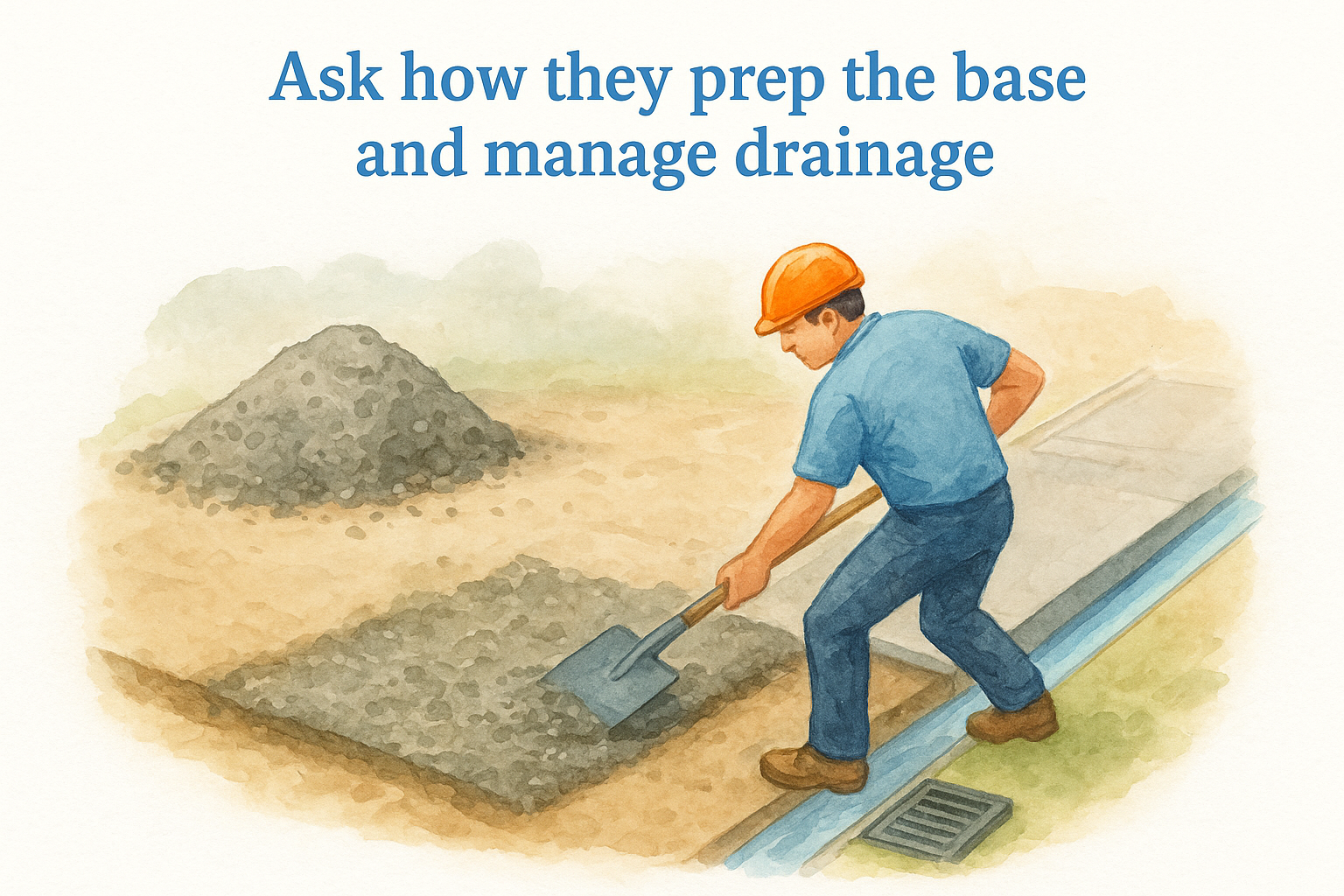
Ask how they prep the base and manage drainage
Proper base preparation prevents settling and cracking by creating a stable, well-draining foundation under your concrete. Contractors should excavate to proper depth, compact the subgrade, and install gravel layers with specific compaction rates for your soil type. They need to explain their drainage strategy, whether that involves slope grading, channel drains, or French drains that move water away from the patio and your home’s foundation.
Ask how they control cracking with joints and reinforcement
Concrete cracks when tensile stress exceeds its strength, so contractors manage this with control joints, rebar placement, or fiber reinforcement. Ask about joint spacing relative to your patio’s dimensions and how they integrate reinforcement without interfering with stamp patterns. Understanding their crack control strategy reveals whether they follow engineering principles or rely on hope.
"Reinforcement placement directly affects how long your patio stays intact."
Ask how they color, stamp, and cure for consistent results
Color consistency depends on uniform concrete mix, proper release agent application, and controlled curing conditions. Contractors should explain whether they use integral color, dry shake hardener, or both, and how they prevent blotching. Their stamping sequence and timing window affect pattern clarity, while curing methods determine final strength and color stability.
6. Compare estimates the right way
Comparing bids requires more than scanning bottom-line numbers. You need to evaluate what each stamped concrete patio contractor includes in their price and how they calculate costs across labor, materials, and project complexity. Contractors who underbid often omit critical steps or use inferior materials that compromise your patio’s longevity, while higher bids sometimes reflect better processes and warranties that save money over time.
Make every bid include the same scope and specs
Request written estimates that specify square footage, concrete thickness, reinforcement type, and finish details so you compare identical work. Ask each contractor to price the same pattern, color system, and sealer grade. Vague bids that say "stamped concrete patio" without listing specs hide quality differences that only become obvious after installation.
"Standardized bid requests eliminate apples-to-oranges comparisons."
Understand what drives price per square foot
Price fluctuates based on site access, base preparation requirements, and pattern complexity. Simple designs cost less per square foot than intricate multi-color patterns with custom borders. Sloped sites that need extensive grading increase base preparation costs, while difficult access that prevents concrete truck proximity adds pumping fees.
Spot common omissions that raise costs later
Watch for missing line items like permit fees, haul-away charges, and sealer application. Some contractors exclude site cleanup or repair of damaged landscaping. Verify whether estimates include control joint installation and whether final grading restores proper drainage around the patio edges.
7. Lock in the contract and aftercare plan
A written contract protects both you and your stamped concrete patio contractor by documenting every commitment before work begins. This agreement should specify project timeline, payment schedule, and warranty terms so you have legal recourse if the contractor fails to deliver as promised. Verbal agreements and handshake deals leave you vulnerable to disputes over quality, delays, and post-installation problems that arise months after completion.
Nail down schedule, payment terms, and change orders
Your contract must state start and completion dates with penalty clauses for unjustified delays. Payment terms should tie disbursements to measurable milestones like base completion, concrete placement, and final sealing instead of upfront deposits that exceed 10% of total cost. Require written change orders with adjusted pricing before allowing any scope modifications during construction.
"Payment tied to milestones keeps contractors accountable throughout the project."
Get clarity on warranty coverage and exclusions
Warranties typically cover structural defects and installation errors but exclude damage from improper maintenance or de-icing salt use. Ask what specific problems the warranty addresses, how long coverage lasts, and whether it transfers to future property owners. Understanding exclusions prevents disputes when you file a claim.
Agree on sealer choice and maintenance timing
Specify the sealer brand and finish type in your contract since this affects slip resistance and maintenance frequency. Contractors should recommend resealing intervals based on your climate and expected traffic patterns. Confirm whether initial sealing occurs immediately after installation or requires a curing period first.
Next steps
You now have a framework for evaluating any stamped concrete patio contractor and avoiding the common mistakes that lead to cracked, faded surfaces. Start by requesting detailed bids that include identical specifications for base prep, reinforcement, and finishing, then verify credentials and insurance before narrowing your options. The contractor you choose should answer technical questions clearly and provide written warranties that cover both materials and workmanship.
Your patio represents a significant investment in your home’s outdoor living space, so take time to compare contractors on process quality rather than price alone. Schedule consultations with at least three contractors to understand how their approaches differ. Turning Point Ventures handles stamped concrete patios throughout Western Washington with full project management from initial design through final sealing. Reach out to discuss your project goals, review our portfolio, and get a detailed estimate that reflects the thorough approach outlined in this guide.


0 Comments