
A pergola can transform your backyard into a functional outdoor living space, but only if it’s built right. When you search for a pergola builder near me, you’re met with dozens of options, each claiming to be the best. The reality? Not all builders have the same expertise, communication style, or commitment to staying on budget. Choosing the wrong contractor can mean delays, cost overruns, and a structure that doesn’t match your vision.
At Turning Point Ventures, we’ve seen firsthand how outdoor projects can either elevate a home or become a source of frustration. As a residential construction company specializing in custom builds and outdoor living spaces across Western Washington, we understand what separates a smooth pergola project from a stressful one. The difference often comes down to asking the right questions before you sign a contract.
This guide walks you through exactly how to evaluate local pergola builders, what credentials and experience to look for, and the red flags that should make you walk away. By the end, you’ll have a clear framework for hiring a professional who can bring your outdoor vision to life, on time and within budget.
What to know before you search
Before you start calling contractors, you need to understand what you’re actually asking for. Most homeowners skip this step and end up in confusing conversations with builders who quote different materials, designs, and price ranges. When you know the basics of pergola construction, you can spot inexperienced contractors immediately and make informed decisions about who to hire.
Know your local permit requirements
Your city or county likely has specific regulations for outdoor structures, and not every builder will volunteer this information upfront. Most pergolas over 120 square feet require a building permit, and some homeowners associations have additional restrictions on height, placement, and materials. You need to confirm these requirements before you contact any builder.
Hiring a contractor who ignores permit requirements puts you at risk for fines, forced removal, and complications when you sell your home.
Call your local building department or check their website to understand what’s required in your area. When you later interview contractors, ask directly how they handle permits and whether their quotes include permit fees. A professional will have clear answers because they’ve done this dozens of times.
Understand the basic pergola options
You’ll encounter three main material categories when you search for a pergola builder near me: wood (typically cedar or redwood), vinyl, and aluminum. Each material affects cost, maintenance, and longevity, so you need to know what you’re comparing when you review bids. Wood offers natural aesthetics but requires regular staining, while vinyl and aluminum deliver lower maintenance at a higher upfront cost.
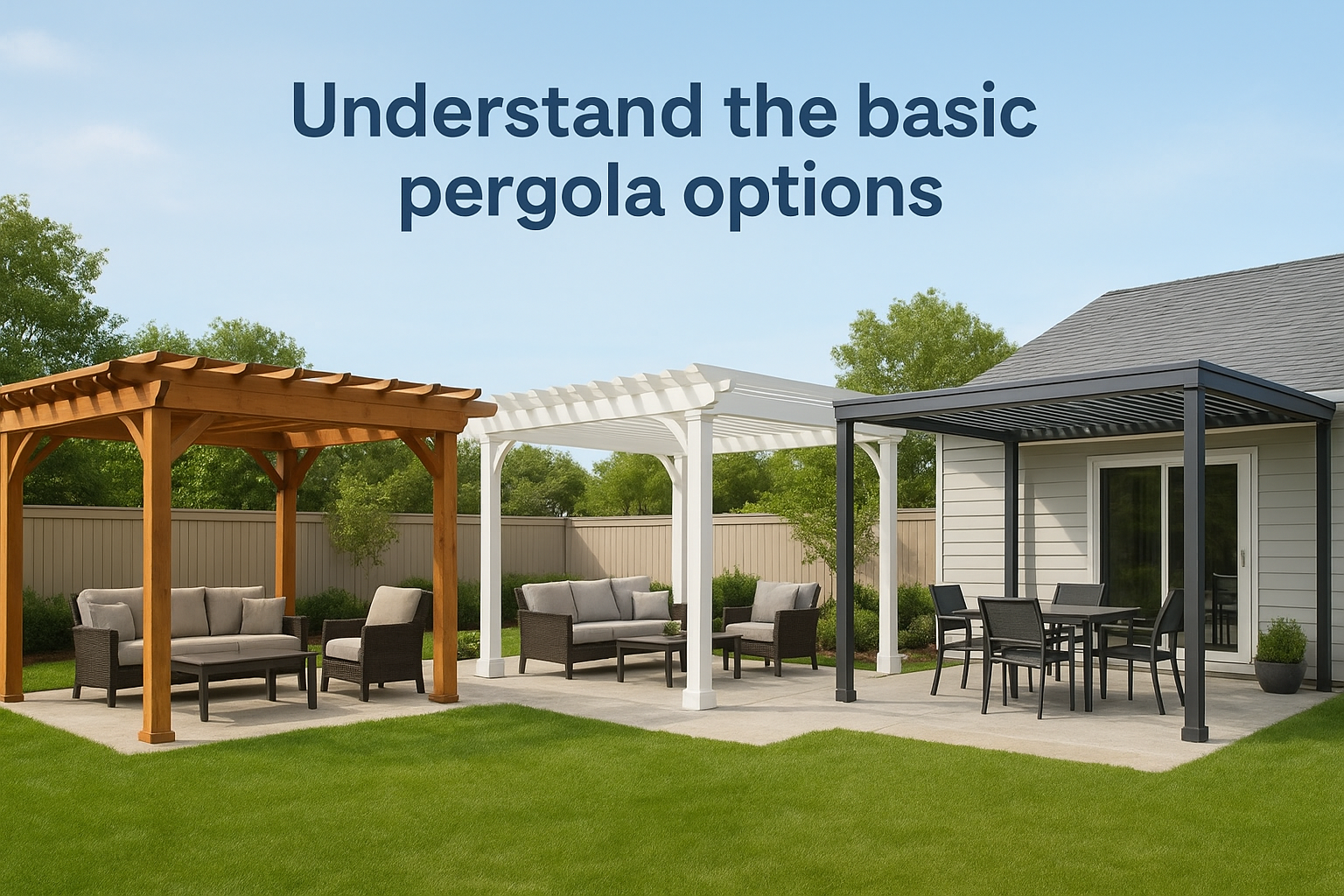
Design variations also impact pricing. Attached pergolas (connected to your home) cost less than freestanding structures because they require fewer support posts. Roof style matters too: open lattice designs are simpler to build than louvered or retractable systems that control sunlight and rain.
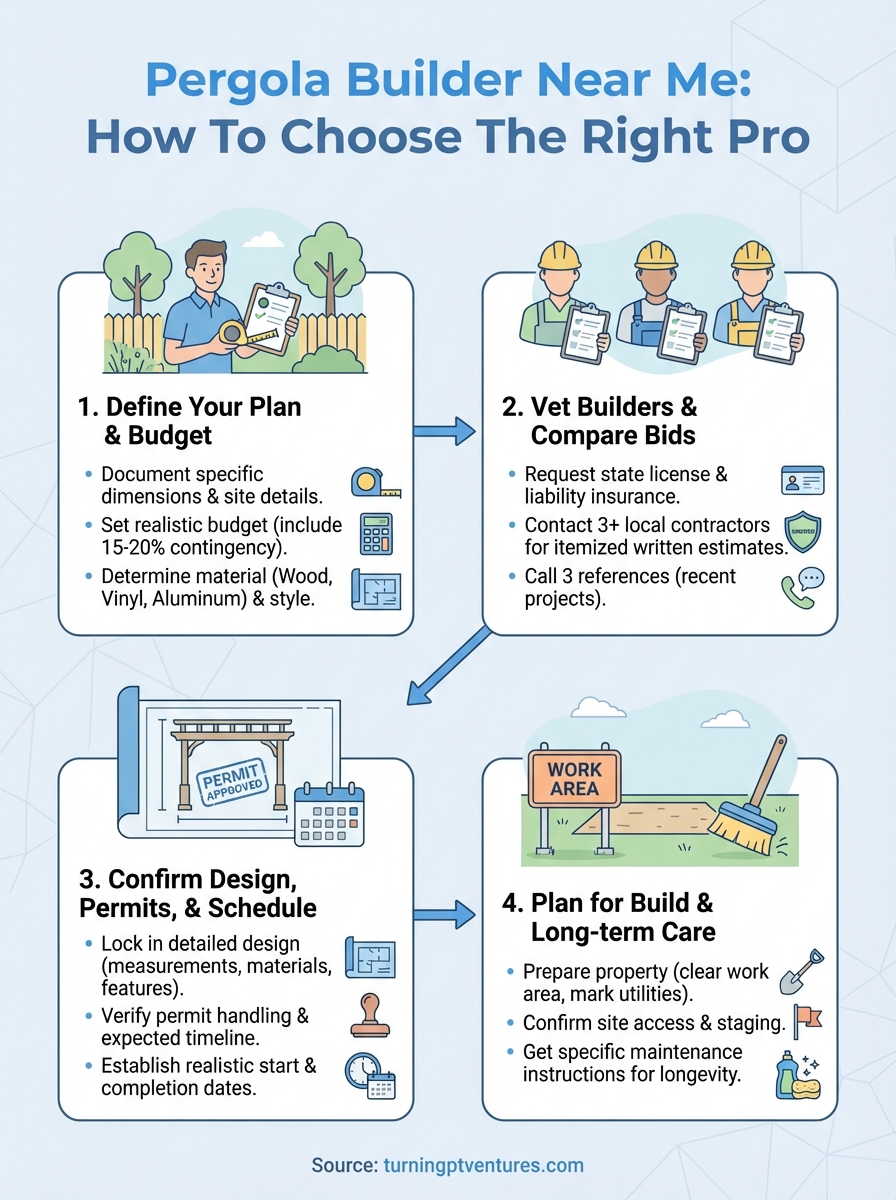
Step 1. Define your pergola plan and budget
You can’t get accurate bids from contractors if you don’t know what you’re asking them to build. The first step is to document your specific requirements so every pergola builder near me that you contact is quoting the same project. This eliminates confusion and lets you compare proposals fairly instead of trying to decode why one bid is $8,000 and another is $15,000.
Measure and map your installation site
Walk outside with a tape measure and record the exact dimensions of where you want your pergola. Note the distance from your house (if you want it attached), any underground utilities marked in the area, and overhead obstacles like power lines or tree branches. Take photos from multiple angles to share with contractors later.
Draw a simple overhead diagram showing your property boundaries, existing structures, and the proposed pergola location. This doesn’t need to be professionally drafted, but it should include measurements in feet and any grade changes or drainage issues. Contractors use this information to assess foundation requirements and identify potential problems before they start digging.
Set a realistic construction budget
Basic wood pergolas typically start around $3,500 to $6,000 for a 10×10 structure, while custom designs with premium materials can exceed $15,000. Research current material costs in your area and decide what features matter most: size, material quality, integrated lighting, or built-in seating.
Your budget should include a 15-20% contingency for unexpected issues like poor soil conditions or material price increases.
Step 2. Vet local builders and compare bids
Once you have your plan and budget defined, you’re ready to contact contractors. The vetting process is where most homeowners make costly mistakes by accepting the first friendly bid they receive. You need to approach this like a structured interview process, asking the same questions to every pergola builder near me and documenting their responses so you can make a fair comparison.
Ask for proof of credentials and references
Every contractor you contact should provide their state contractor license number and proof of liability insurance without you having to ask twice. Call their insurance company directly to verify coverage is current and adequate (minimum $1 million general liability). Request three references from projects completed in the last 12 months and actually call those homeowners to ask about communication, budget adherence, and cleanup.
Legitimate professionals expect these questions and provide documentation immediately; hesitation is a red flag.
Request detailed written estimates
Verbal quotes mean nothing when disputes arise. You need itemized written bids that break down materials, labor, permits, and any site preparation costs. Each estimate should specify the exact materials by brand and grade (like "Western Red Cedar, clear grade" instead of just "wood"), projected start and completion dates, and payment schedule.
Compare bids line by line to identify where prices diverge. One contractor might quote cheaper labor but use lower-grade materials, while another includes features like post anchors or staining that others left out.
Step 3. Confirm design, permits, and schedule
After you’ve selected a contractor from your comparison, you need to finalize every detail before construction begins. This confirmation stage prevents miscommunication that leads to costly mid-project changes or delays. The pergola builder near me you’ve chosen should provide updated documentation that reflects your final decisions about materials, dimensions, and features.
Lock in your final design details
Request a detailed drawing or rendering that shows exact measurements, post placement, and material specifications. This document should include the height of the structure, spacing between rafters, and any custom features like built-in planters or electrical conduit for lighting. Review it carefully against your original vision and ask for revisions if anything doesn’t match.
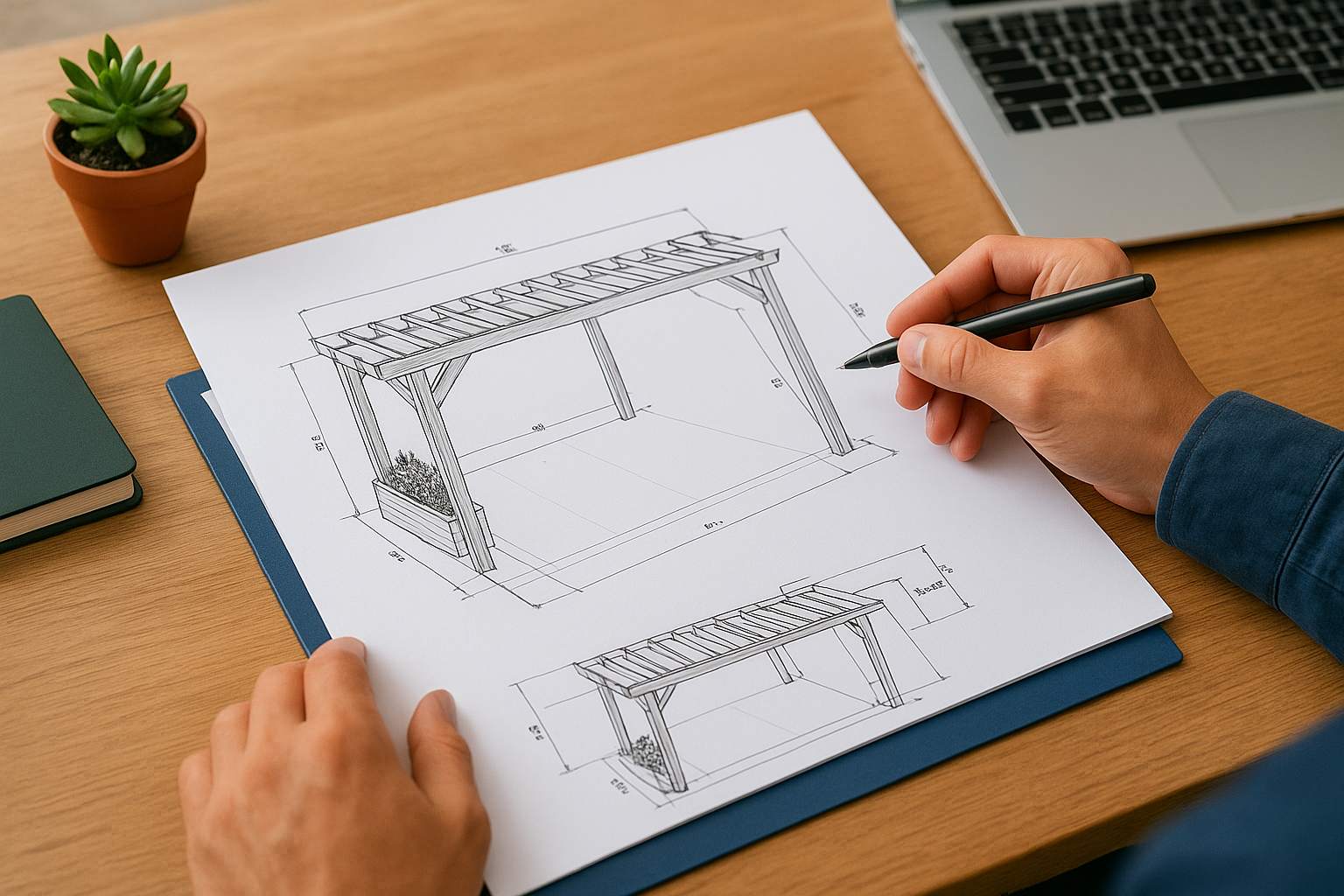
Get written confirmation that any design changes after this point will require a change order with additional costs clearly stated.
Verify permit handling and timeline
Confirm in writing who submits permit applications (most professional contractors handle this) and the expected approval timeframe in your jurisdiction. Ask for a realistic construction schedule that accounts for permit delays, weather contingencies, and material lead times. Your contract should specify start and completion dates with penalties for delays caused by the contractor, not permit offices or weather.
Step 4. Plan for the build and long-term care
Your contract is signed and construction is approaching, but your job isn’t finished. You need to prepare your property and understand the maintenance requirements that will protect your investment for decades. Most homeowners ignore this step and face preventable damage or conflicts with their contractor during the build.
Prepare your property for construction
Clear the work area of furniture, grills, and planters at least three days before your scheduled start date. Mark any irrigation lines or underground utilities with flags so the crew doesn’t accidentally damage them while digging post holes. Confirm that your contractor has clear access to the site and knows where they can park equipment and store materials.
Construction crews need unobstructed access and a staging area; failing to provide this causes delays that eat into your timeline.
Establish a maintenance schedule
Wood pergolas require annual cleaning and re-staining to prevent rot and maintain color, while vinyl and aluminum need only periodic washing with soap and water. Ask your pergola builder near me for specific maintenance instructions based on your chosen materials and local climate conditions. Schedule your first inspection for six months after completion to check for settling, loose hardware, or finish degradation that might need early attention.
Next steps
You now have a complete framework for finding and hiring a qualified pergola builder. Start by documenting your exact design requirements and realistic budget, then contact at least three local contractors to compare their credentials, insurance coverage, references, and detailed bids. The time you invest in this vetting process saves you from delays, cost overruns, and substandard work that requires expensive fixes down the road.
The difference between a successful pergola project and a frustrating one comes down to choosing a contractor who communicates clearly and manages every detail from permits to final cleanup. At Turning Point Ventures, we build custom outdoor living spaces across Western Washington with transparent pricing and hands-on project management. If you’re ready to work with a pergola builder near me who treats your property with the same care we’d give our own homes, contact us to discuss your vision and receive a detailed, itemized quote.


0 Comments