
You’ve decided to renovate your kitchen, and now comes the question that shapes everything from your daily routine to your budget: how long does a kitchen remodel take? The answer isn’t a single number, it depends on the scope of your project, your material selections, and how prepared you are before demolition day arrives.
For most homeowners, a kitchen remodel takes anywhere from 6 to 16 weeks once construction begins. But that timeline doesn’t include the planning phase, which can add several more weeks or even months depending on design complexity and permit requirements. Understanding these phases helps you plan around the disruption and set realistic expectations.
At Turning Point Ventures, we manage kitchen renovations across the Puget Sound area and know firsthand how timeline questions shape project decisions. This guide breaks down the timeline by phase, from initial planning through final inspection, so you know exactly what to expect and which factors can speed things up or cause delays.
Why kitchen remodel timelines vary
The question of how long does a kitchen remodel take has no universal answer because every kitchen renovation involves a unique combination of factors. Your timeline depends on project scope, material selections, permit requirements, and labor availability. A simple cosmetic refresh might wrap up in four weeks, while a complete structural overhaul could stretch beyond four months.
Understanding these variables helps you set realistic expectations and make informed decisions during planning. The choices you make at the design stage directly impact your construction timeline, sometimes adding weeks or even months to the overall schedule.
Project scope determines base timeline
Your renovation’s scope serves as the foundation for every timeline estimate. If you’re only replacing cabinet doors, countertops, and appliances without moving plumbing or electrical, you’re looking at the shorter end of the spectrum. This type of cosmetic update typically takes 3 to 6 weeks because the existing infrastructure stays in place.
Projects that involve structural changes or layout modifications add significant time. Moving your sink to a new location requires rerouting plumbing lines, which means opening walls, coordinating multiple trades, and waiting for inspections. Similarly, removing a wall to create an open-concept space involves structural engineering, permitting, and careful demolition before any finish work begins. Each of these elements compounds your timeline.
The difference between a surface-level refresh and a structural renovation can add 4 to 8 weeks to your project timeline.
Material availability creates delays
Custom elements extend your timeline more than any other single factor. If you order custom cabinetry instead of stock options, you add 6 to 12 weeks just for manufacturing and delivery. Special-order tiles, unique countertop materials, or imported fixtures all require lead time that pushes your completion date further out.
Supply chain disruptions can derail even the most carefully planned schedules. A backordered appliance or delayed countertop fabrication forces your contractor to work around the missing piece, sometimes pausing work entirely until materials arrive. Choosing readily available products from local suppliers minimizes these risks and keeps your project moving forward.
Permitting and inspection requirements
Local building codes directly impact how long your remodel takes. Most jurisdictions require permits for electrical, plumbing, and structural work, and each permit comes with mandatory inspections at various stages. Your contractor can’t move forward until an inspector signs off on the completed work, which means you’re dependent on municipal scheduling and availability.
Permit approval alone can take anywhere from 2 days to 6 weeks depending on your location and the complexity of your plans. Some municipalities process simple permits within a week, while others require multiple reviews and revisions. Complex projects involving structural changes typically face longer review periods because they require engineering stamps and additional documentation.
Labor scheduling and coordination
Your contractor’s workload affects when your project can start and how quickly it progresses. Reputable contractors with strong track records often book projects 2 to 4 months in advance, which means your timeline starts before demolition day. Once work begins, your contractor must coordinate multiple specialized trades including plumbers, electricians, tile setters, and cabinet installers.
Trade scheduling creates natural bottlenecks in the construction timeline. Electricians need to complete their rough-in work before drywall goes up, and cabinet installers can’t start until walls are painted. If one trade falls behind or encounters unexpected issues, every subsequent phase gets pushed back. Experienced contractors build buffer time into their schedules to absorb minor delays without derailing the entire project.
Typical kitchen remodel timeline at a glance
Most homeowners want a clear answer to how long does a kitchen remodel take before they commit to the disruption. The truth is that construction itself typically takes 6 to 12 weeks, but the complete timeline from initial planning to finished kitchen spans 3 to 6 months. This broader view accounts for design decisions, material ordering, and all the preparation work that happens before demolition begins.
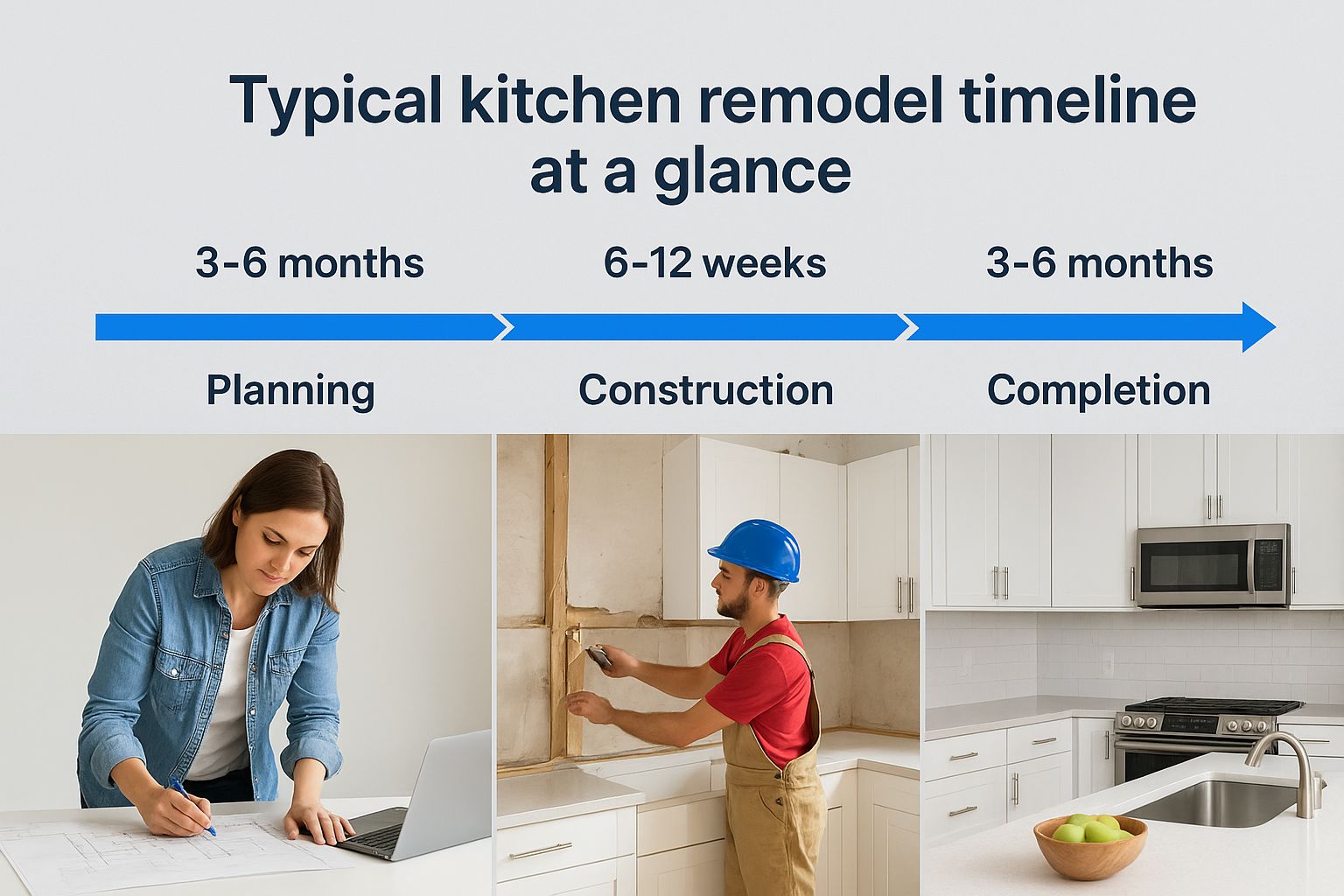
Your specific timeline depends on whether you’re doing a minor refresh, a major renovation, or a complete rebuild. Each category comes with predictable phase durations that help you plan around the temporary loss of your kitchen. Understanding these timeframes helps you coordinate temporary cooking arrangements, schedule time off work for decision points, and set realistic expectations with your family.
Minor cosmetic updates
A cosmetic refresh involves replacing cabinet doors, updating hardware, installing new countertops, and swapping out appliances without changing your kitchen’s footprint or infrastructure. This level of renovation typically takes 4 to 6 weeks from start to finish, with minimal disruption to your home. You can often continue using parts of your kitchen during the work because plumbing and electrical systems remain untouched.
The planning phase for cosmetic updates takes 2 to 3 weeks since you’re working with existing layouts and readily available materials. Most of this time goes toward selecting finishes, confirming measurements, and coordinating delivery schedules. Construction moves quickly because contractors don’t need to coordinate multiple trades or wait for inspections between phases.
Major renovations with layout changes
Projects that involve moving walls, relocating appliances, or reconfiguring your floor plan extend your timeline significantly. These renovations typically require 8 to 12 weeks of construction time after you complete the planning phase. The additional time accounts for structural work, permit approvals, and the sequential nature of coordinating electricians, plumbers, and finish carpenters.
Planning for major renovations takes 4 to 8 weeks because you need detailed architectural drawings, engineering reviews, and permit submissions before work begins. Your contractor must sequence the work carefully so each trade can complete their tasks without interfering with others. This coordination adds time but ensures your kitchen meets code requirements and functions properly for decades.
Major renovations that change your kitchen’s layout typically take twice as long as cosmetic updates because they require permits, inspections, and coordination of multiple specialized trades.
Full gut renovations
Complete kitchen rebuilds where you strip everything to the studs and start fresh represent the longest timeline category. Expect 12 to 16 weeks of construction after completing your design and securing permits. These projects involve every trade, multiple inspection points, and often reveal hidden issues like outdated wiring or water damage that add unplanned work to your scope.
Plan and design phase timeline
The planning phase determines everything that follows in your renovation, yet many homeowners underestimate how long it takes. This stage typically requires 4 to 8 weeks before any physical work begins, though complex projects can extend to 12 weeks or more. Your decisions during this period directly impact how long does a kitchen remodel take overall, since rushing through design choices often leads to mid-project changes that delay construction.

You’ll work through three distinct steps during planning: initial consultation and vision development, detailed design and material selection, and budget finalization. Each step builds on the previous one, and skipping ahead creates gaps that surface later as costly delays or redesigns.
Initial consultation and vision development
Your first meetings with your contractor focus on defining your goals, evaluating your existing space, and establishing a realistic budget range. This phase takes 1 to 2 weeks and involves site visits, preliminary measurements, and discussions about how you use your kitchen. Your contractor assesses structural limitations, identifies potential issues like outdated electrical panels or plumbing constraints, and determines whether your vision aligns with your home’s infrastructure.
During these early conversations, you’ll discuss layout preferences, must-have features, and deal-breakers. Bringing reference images helps communicate your aesthetic preferences, but your contractor will guide you toward options that work within your space and budget. This groundwork prevents misaligned expectations and reduces the likelihood of expensive mid-project changes.
Design refinement and material selections
Once you agree on the general direction, detailed design work begins. This phase takes 2 to 4 weeks and involves creating floor plans, elevations, and 3D renderings that show exactly how your finished kitchen will look. You’ll make specific decisions about cabinet styles, countertop materials, tile choices, lighting fixtures, and appliance packages during this period.
Material selection meetings often reveal budget adjustments as you price out different options. Your contractor provides samples and explains lead times for each choice, helping you balance aesthetic preferences against timeline constraints. Custom elements that require long manufacturing periods get ordered first to keep your construction schedule on track.
The design phase is where you make every major decision that affects your timeline, from custom cabinetry that takes 10 weeks to fabricate to stock options available in days.
Budget finalization and contract signing
The final planning step involves converting your design into a detailed contract with line-item pricing and a construction timeline. This process takes 1 to 2 weeks as your contractor calculates material costs, labor hours, and coordination requirements. You’ll review the scope document that outlines what’s included, what requires additional charges, and how change orders get handled during construction.
Contract negotiations sometimes reveal budget gaps that require design modifications. Your contractor works with you to adjust material selections or modify the scope to bring the project within your financial comfort zone. Signing the contract triggers permit applications and material orders, officially starting your renovation timeline.
Pre-construction and ordering timeline
After you finalize your design and sign the contract, the pre-construction phase begins. This period typically takes 3 to 6 weeks and involves securing permits, ordering materials, and coordinating schedules before demolition starts. Many homeowners underestimate this phase when they ask how long does a kitchen remodel take, yet these weeks determine whether your construction runs smoothly or faces constant delays.
Your contractor handles most pre-construction tasks, but you’ll need to make yourself available for final material confirmations, permit questions, and scheduling coordination. This phase happens largely behind the scenes, but any delays during this period push your entire construction timeline back.
Permit applications and approvals
Your contractor submits permit applications to your local building department within 1 to 3 days after you sign the contract. The application includes your architectural drawings, electrical plans, plumbing layouts, and any structural engineering documents required for your project. Most jurisdictions require separate permits for electrical work, plumbing modifications, and structural changes, each with its own review process.
Permit approval times vary dramatically by location. Some municipalities process straightforward permits in 3 to 5 business days, while others take 4 to 6 weeks for complex projects involving structural modifications. Your contractor monitors the application status and addresses any revision requests from the building department to keep things moving forward.
Permit delays represent the single most unpredictable element of your pre-construction timeline, with approval times ranging from days to weeks depending on your local building department’s workload.
Material ordering and lead times
Custom cabinetry orders go out immediately after contract signing because they typically require 8 to 12 weeks for manufacturing and delivery. Your contractor also orders countertops, tile, fixtures, and appliances during this phase, coordinating delivery dates to match your construction schedule. Stock cabinets arrive in 2 to 4 weeks, making them a faster option if timeline matters more than customization.
Appliances and fixtures with shorter lead times get ordered closer to installation dates to avoid storage issues and damage risks. Your contractor tracks all orders and maintains communication with suppliers to identify potential delays early. Material shortages or backorders discovered during this phase give you time to select alternatives without stopping construction.
Final pre-construction coordination
Your contractor schedules all trades and confirms their availability during the final week before demolition. This coordination includes electricians, plumbers, HVAC technicians, and specialized installers who need to complete work in a specific sequence. You’ll receive a construction timeline with key milestones and approximate completion dates for each phase.
Site preparation involves setting up temporary barriers, covering floors in adjacent rooms, and establishing waste disposal systems. Your contractor also discusses temporary kitchen arrangements and explains which utilities will be shut off during specific phases of construction.
Construction timeline step-by-step
Once permits arrive and materials ship, demolition begins. The construction phase typically spans 6 to 10 weeks for major renovations, broken into distinct stages that happen in a specific order. Each stage builds on the previous work, which means delays in early phases push everything else back. Understanding this sequence helps you anticipate when you’ll face the most disruption and when you can expect to see visible progress.
Your contractor schedules work in a way that allows inspections to happen at required checkpoints. You can’t install drywall before the electrical inspector signs off on your wiring, and you can’t set cabinets before walls are finished. This sequential approach explains why kitchen renovations take weeks instead of days despite having multiple workers on site.
Demolition and prep work
Demo work takes 1 to 3 days depending on your project scope. Your contractor removes existing cabinets, countertops, appliances, and flooring to expose the bare walls and subfloor. If your renovation involves layout changes, this phase includes removing walls, relocating doorways, or opening up spaces for new windows. Workers haul debris away daily to keep your home manageable and safe.
After demolition, your contractor addresses any structural issues discovered behind walls. Old homes often reveal outdated wiring, plumbing leaks, or inadequate insulation that needs correction before moving forward. These discoveries can add days or weeks to your timeline, but fixing them prevents bigger problems later.
Rough-in work and framing
Plumbers and electricians install new lines during the rough-in phase, which takes 1 to 2 weeks. They run pipes to your new sink location, install electrical boxes for outlets and lighting, and set up any HVAC modifications required by your design. This work happens while walls remain open so trades can access studs and joists easily.
Framing for new walls or structural modifications also happens during this period. Your contractor builds out soffits, bump-outs, or support structures needed for your design. Inspectors visit at the end of this phase to verify everything meets code before walls close up.
Rough-in inspections represent critical checkpoints that prevent any further work until your local building department approves the plumbing, electrical, and structural modifications.
Finishing phases
Drywall installation takes 3 to 5 days including taping, mudding, and sanding. After walls cure, painters apply primer and finish coats over 1 to 2 weeks. Meanwhile, your countertop fabricator templates your surfaces and begins cutting material at their shop.
Cabinet installation happens next, taking 2 to 3 days for standard layouts or up to a week for complex designs. Installers level each unit, secure them to walls, and prepare openings for appliances. Countertop installation follows within days, and plumbers return to connect your sink and install fixtures.
Final trades complete their work during the last week. Electricians install light fixtures and outlets, tile setters finish backsplashes, and appliance installers deliver and hook up your new equipment. This phase brings your kitchen from construction zone to functional space.
Final inspections, punch list, and move-in timeline
Your kitchen looks complete, but several steps remain before you can fully move back in. The final phase typically takes 1 to 2 weeks and involves official inspections, addressing minor issues, and cleaning up after construction. This period often feels frustrating because you see a finished kitchen you can’t yet use, but rushing through these steps creates problems that surface after your contractor leaves.

Understanding this final timeline helps you plan when to schedule your welcome-home dinner or when you can realistically expect to cook your first meal in your renovated space. Most contractors build this phase into their overall schedule, but unexpected inspection failures or punch list items can extend how long does a kitchen remodel take by several days.
Final inspection process
Your local building department schedules a final inspection within 3 to 5 business days after your contractor requests it. The inspector verifies that all electrical, plumbing, and structural work meets code requirements and matches the approved permits. They check that outlets function properly, plumbing connections don’t leak, and any ventilation systems operate correctly.
Inspections occasionally reveal issues that require corrections before approval. Your contractor addresses these items immediately, which might take 1 to 3 days depending on complexity. After completing corrections, you need another inspection appointment, potentially adding another week to your timeline if the inspector’s schedule stays booked.
Failed inspections represent the most common reason final timelines extend beyond estimates, as corrections and re-inspection scheduling can add 5 to 10 days to your project completion.
Punch list walkthrough and corrections
Your contractor walks through the completed kitchen with you to identify minor imperfections that need attention. Common punch list items include touching up paint, adjusting cabinet doors, fixing loose handles, or addressing small gaps in tile work. This walkthrough happens after the final inspection passes and takes about an hour as you examine every detail together.
Addressing punch list items typically requires 2 to 4 days as your contractor returns to make adjustments. You might notice issues they miss during the initial walkthrough, so speak up immediately about anything that looks off. Most contractors expect some punch list work and schedule time for these corrections in their timeline.
Move-in preparation
Deep cleaning happens after punch list corrections wrap up. Your contractor removes dust, wipes down surfaces, and cleans inside cabinets before you move belongings back in. This process takes 1 day and includes hauling away any remaining materials or packaging.
You can start moving items back into your kitchen as soon as cleaning finishes. Plan to spend 1 to 2 days organizing your cabinets, setting up appliances, and arranging your space. Your contractor provides warranty documentation and care instructions for your new surfaces and fixtures during this handoff period.
How to keep your remodel on schedule
You can’t control every variable in a kitchen renovation, but you can take specific actions that minimize delays and keep your project moving forward. The difference between a smooth renovation and one that drags on for months often comes down to preparation, communication, and realistic expectations. Contractors consistently report that homeowners who stay engaged and make timely decisions experience fewer timeline extensions.
Your role in maintaining the schedule matters as much as your contractor’s project management. When you understand where delays typically occur, you can take preventive steps that protect your completion date. These strategies work across all project sizes, from minor updates to complete renovations that answer how long does a kitchen remodel take.
Make all major decisions before demolition
Changing your mind mid-project creates the most common and avoidable delays. If you select white cabinets during planning but switch to gray after installation begins, your contractor must reorder materials and adjust the schedule while waiting for new deliveries. Every design change after work starts adds days or weeks to your timeline.
Lock in your selections during the planning phase and resist the temptation to upgrade or modify once construction begins. Your contractor needs confirmed cabinet styles, countertop materials, tile choices, and fixture selections before the first wall comes down. This commitment feels restrictive, but it protects your timeline from self-inflicted delays.
Choose materials with realistic lead times
Custom elements extend timelines more than any other single factor. Selecting stock cabinets instead of custom builds can save 6 to 10 weeks in manufacturing time without sacrificing quality. Similarly, choosing countertop materials your fabricator keeps in inventory means installation happens within days instead of weeks after your cabinets go in.
Ask your contractor about lead times for every material you consider during planning. If you fall in love with imported tile that requires 12 weeks for delivery, you need to order it months before demolition starts or accept that your project timeline extends to accommodate it.
Materials with long lead times should get ordered during the planning phase, not after construction begins, to avoid pausing work while you wait for delayed deliveries.
Build contingency time into your expectations
Even perfectly planned renovations encounter unexpected issues. Setting your completion expectations 2 to 3 weeks beyond your contractor’s estimate gives you buffer time that absorbs minor delays without creating stress. You’ll feel relieved if the project finishes early instead of frustrated by small setbacks.
Experienced contractors build buffer time into their schedules, but external factors like permit delays, material backorders, or discovered structural issues can still extend timelines. Planning around a realistic worst-case scenario helps you manage temporary living arrangements and coordinate your schedule appropriately.
Stay accessible for contractor questions
Your contractor needs quick responses when questions arise during construction. Delays of 2 to 3 days waiting for your decision on an unexpected issue compound throughout the project. Make yourself available by phone during business hours and respond to texts or emails within 24 hours.
Schedule regular check-ins with your contractor to review progress and address upcoming decisions before they become urgent. This proactive communication catches potential problems early and keeps your project moving through each phase without unnecessary pauses.
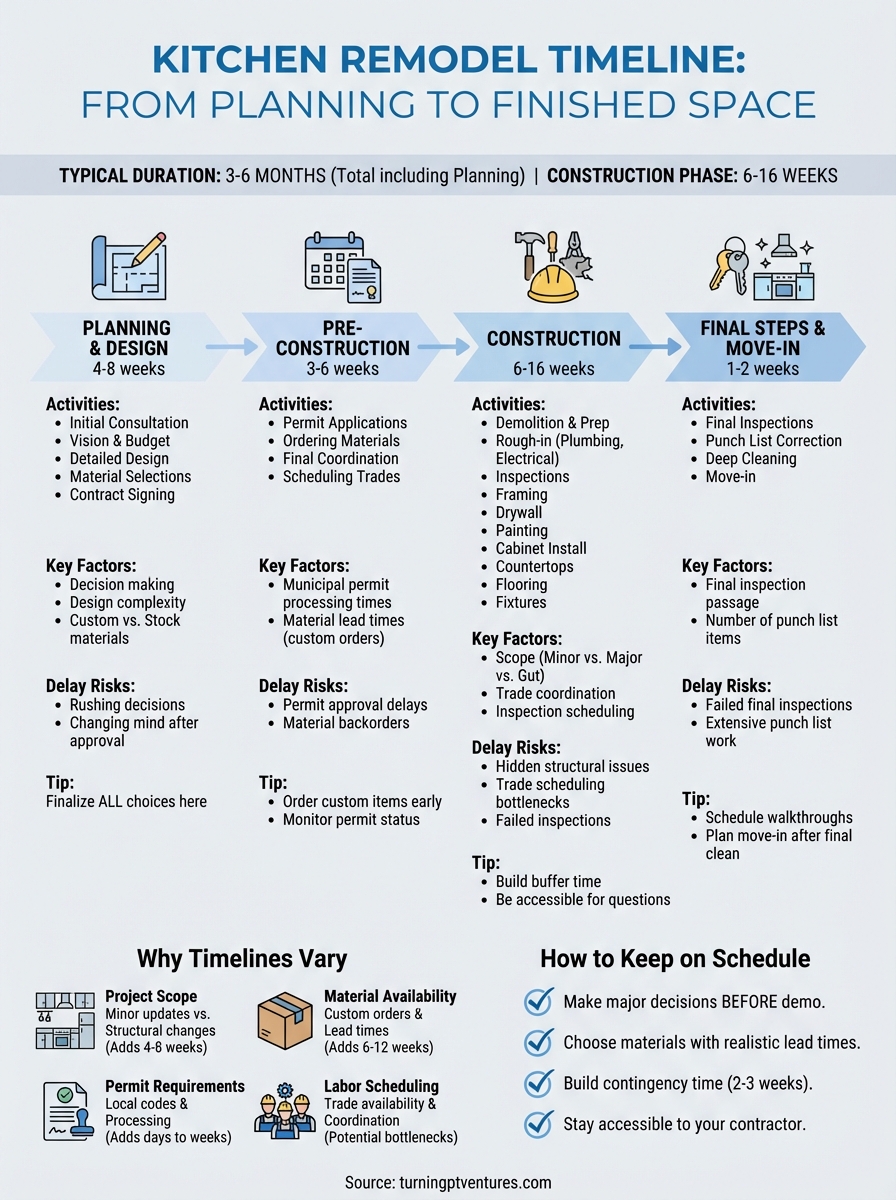
Conclusion section
Understanding how long does a kitchen remodel take helps you plan your life around the disruption and set realistic expectations from the start. Most projects span 3 to 6 months from initial planning through final walkthrough, with 6 to 12 weeks dedicated to active construction. Your timeline depends on project scope, material selections, permit requirements, and how quickly you make decisions during the planning phase.
Planning ahead minimizes delays and keeps your renovation moving forward. Lock in your design choices before demolition begins, choose materials with realistic lead times, and stay accessible when your contractor needs quick answers. These steps protect your timeline from preventable setbacks.
At Turning Point Ventures, we manage kitchen renovations across the Puget Sound area with clear communication and detailed scheduling that keeps projects on track. Explore our services to discuss your kitchen renovation timeline and get started with a team that handles every phase of your project.


0 Comments