
A kitchen remodel cost estimate starts with one frustrating reality: the range of numbers you’ll find online is enormous. You might see anything from $15,000 to $150,000+, and without context, those figures don’t help you plan much of anything. What actually matters is understanding how your kitchen, its size, condition, layout, and the scope of work you’re after, drives the final number on the contract.
At Turning Point Ventures, we handle kitchen renovations across the Puget Sound area as part of our residential remodeling work. We’ve seen firsthand how early budget clarity changes the entire trajectory of a project. Homeowners who walk in with a realistic cost range make faster decisions, avoid painful mid-project cuts, and end up happier with the result. Those who skip this step? They’re the ones most likely to feel blindsided by overruns halfway through demo.
This guide breaks down kitchen remodel costs by size, scope, and region, with specific price ranges you can actually use. We’ll walk through the major cost factors, explain where budgets tend to bloat, and give you a framework for building an estimate that fits your goals before you ever pick up the phone to call a contractor.
Why a kitchen remodel cost estimate matters
Getting a rough cost range before you commit to anything changes how you approach the entire project. Without a number to anchor your decisions, you risk making choices in isolation: picking cabinets before knowing what’s left for appliances, or approving a layout change without understanding what it costs to move plumbing. A solid kitchen remodel cost estimate gives you a framework that connects every individual decision to the overall budget, so nothing blindsides you once the work is underway.
It drives your design choices
When you know your budget range upfront, you make better design decisions faster. If your total is $40,000, you know early on to look at mid-range cabinet lines rather than custom built-ins, and you can prioritize where to spend more and where to pull back intentionally. Without that number, designers and contractors will often spec to a level you can’t afford, and backtracking through finalized plans wastes time and creates frustration for everyone involved.
A clear estimate doesn’t limit your vision – it channels it into choices you can actually execute.
Knowing your number also helps you sequence the project correctly. Some homeowners find that a phased approach fits their finances better than a full gut renovation. Starting with cabinets, countertops, and appliances in phase one, then returning to flooring or lighting later, is a legitimate strategy when you understand what each phase actually costs rather than treating the renovation as one large unknown figure.
It protects you during contractor conversations
Walking into a contractor meeting with a realistic cost range puts you in a much stronger position. Contractors can tell when a client has done their homework, and clients who understand typical costs in their area tend to receive more straightforward proposals. You’re less likely to get a bid padded for unknowns when the contractor knows you have a baseline and can recognize when something looks off.
Your estimate also helps you compare bids accurately across multiple contractors. If one proposal comes in 40% below the others, that’s a red flag worth investigating rather than a reason to sign quickly. Understanding what drives kitchen remodel costs lets you ask sharper questions: Where are they cutting? What’s included in the scope? Are permits, debris removal, and labor fully accounted for? A well-researched estimate turns those conversations from guesswork into a real evaluation.
Average kitchen remodel costs in 2026
Most kitchen remodels in the US fall somewhere between $27,000 and $80,000 in 2026, but that range is only useful when you break it down by scope and size. A single average number tells you almost nothing about what your specific project will cost. Building a reliable kitchen remodel cost estimate starts with placing your project into the right tier.
Cost by project scope
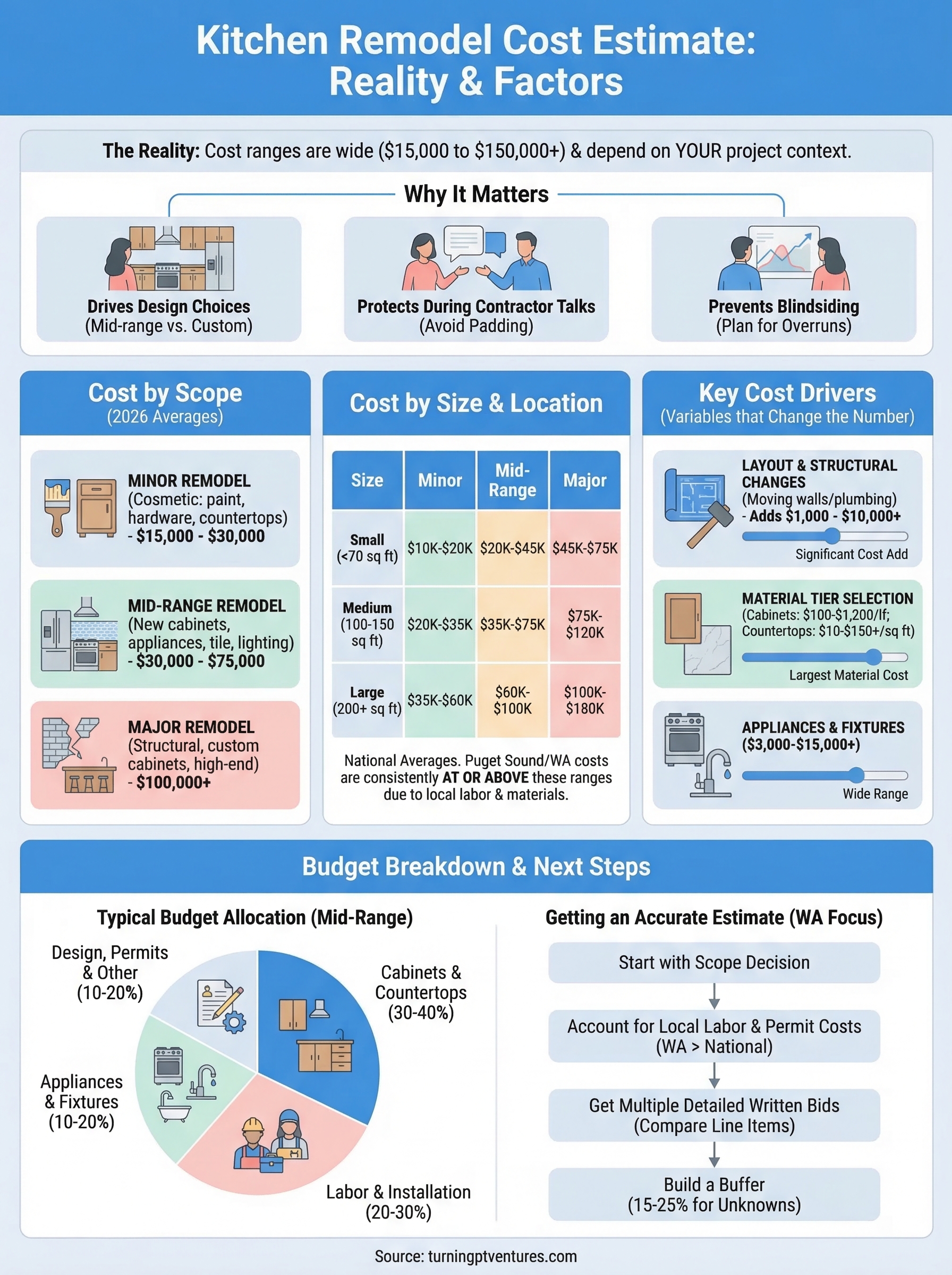
Minor remodels covering cosmetic updates like cabinet fronts, hardware, countertops, and paint typically run $15,000 to $30,000. Mid-range remodels that include new cabinets, updated appliances, tile work, and lighting land between $30,000 and $75,000. Major renovations with structural changes, custom cabinetry, high-end appliances, and full layout reconfigurations can push well past $100,000.
The scope of your work, not your kitchen’s square footage, is the single biggest driver of where your project lands in these ranges.
Cost by kitchen size
Size still plays a real role, particularly on material quantities and labor hours. A common industry benchmark is $150 to $250 per square foot for mid-range work, with premium custom kitchens reaching $300 to $500 per square foot or more.
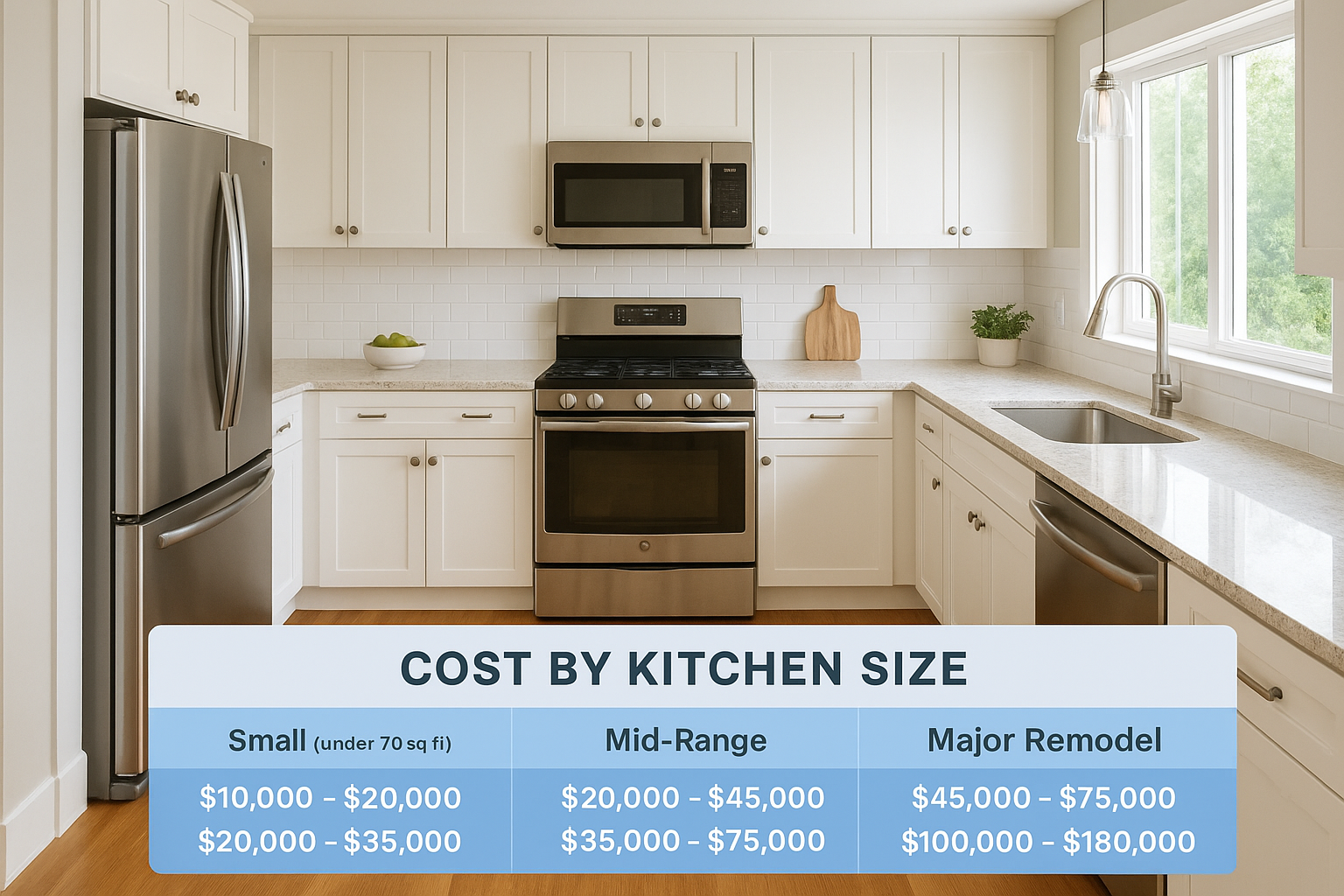
| Kitchen Size | Minor Remodel | Mid-Range | Major Remodel |
|---|---|---|---|
| Small (under 70 sq ft) | $10,000 – $20,000 | $20,000 – $45,000 | $45,000 – $75,000 |
| Medium (100-150 sq ft) | $20,000 – $35,000 | $35,000 – $75,000 | $75,000 – $120,000 |
| Large (200+ sq ft) | $35,000 – $60,000 | $60,000 – $100,000 | $100,000 – $180,000 |
These figures reflect national averages, and your location shifts the numbers further. Western Washington and the broader Puget Sound area consistently track at or above the national average due to local labor rates and regional material costs, which is worth factoring in before you set your budget ceiling.
Cost calculator inputs that change the number
Any online kitchen remodel cost estimate tool asks you to plug in variables, and understanding what those variables represent helps you use them correctly. These inputs map to real cost drivers that your contractor prices individually. Knowing which ones carry the most weight lets you make deliberate trade-offs rather than guessing where to cut.
Layout changes and structural work
Moving walls, relocating plumbing, or shifting the position of your sink, stove, or refrigerator adds significant cost to any project. Plumbing relocation alone runs $1,000 to $5,000 depending on how far the lines need to move and whether the work requires opening a subfloor or ceiling. Structural changes like removing a load-bearing wall typically add $3,000 to $10,000 when you factor in engineering, permitting, and beam installation. If your layout stays in place, you cut a substantial chunk from your estimate right away.
Keeping your existing plumbing and electrical layout is the single fastest way to reduce your kitchen remodel budget without sacrificing quality.
Material tier selection
Cabinet quality is the largest single material cost in most kitchen budgets, ranging from $100 to $1,200 per linear foot depending on whether you choose stock, semi-custom, or fully custom options. Countertop material swings just as dramatically, with laminate starting around $10 per square foot and premium stone like quartzite reaching $100 or more installed. Each of these inputs compounds, so upgrading multiple categories at once pushes your total toward the high end of any range fast.
Here are the three material categories that move your budget the most:
- Cabinets: $100 to $1,200 per linear foot (stock to custom)
- Countertops: $10 to $100+ per square foot installed
- Appliances: $2,000 to $15,000+ depending on brand and tier
What each part of a kitchen remodel costs
Breaking your kitchen remodel cost estimate into individual line items gives you far more control over where your money actually goes. Each category carries its own range, and knowing those ranges lets you build a realistic total rather than reacting to a lump-sum number on a proposal.
Cabinets and countertops
Cabinets typically consume 30 to 40 percent of your total kitchen budget, making them the most critical category to lock in early. Stock cabinets run $100 to $300 per linear foot installed, semi-custom options land around $150 to $650, and fully custom cabinetry starts at $500 and climbs well past $1,200 per linear foot. Countertops add another $1,500 to $5,500 on average, depending on material, edge profile, and total square footage.
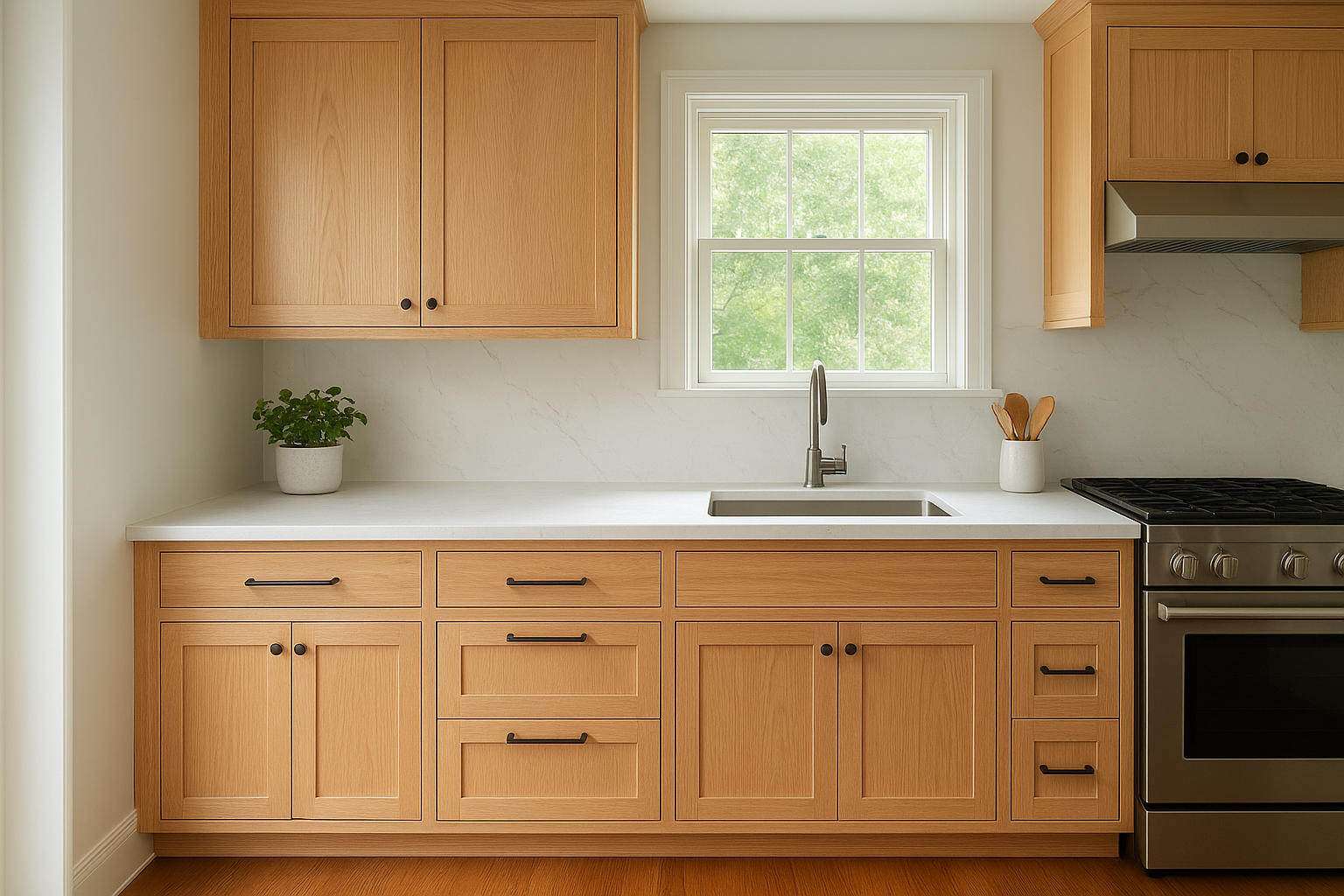
Cabinets and countertops together often account for more than half your total spend, so settling these two line items first gives you the clearest picture of what remains.
Here is a quick breakdown of common countertop materials by installed cost:
- Laminate: $10 to $30 per square foot
- Quartz or granite: $50 to $90 per square foot
- Premium stone (quartzite, marble): $90 to $150+ per square foot
Labor and installation
Labor across all trades, including carpentry, plumbing, and electrical, typically lands between $8,000 and $25,000 for a mid-range project. Hourly rates run $50 to $150 per hour depending on trade specialty and regional labor market conditions. Hiring a general contractor to manage subcontractors adds 10 to 20 percent on top of direct labor costs, but it also removes significant scheduling and coordination work from your plate.
Appliances, fixtures, and lighting
A standard four-piece appliance set runs $3,000 to $8,000 at mid-range, with premium brands pushing well above $15,000. Fixtures like sinks and faucets add another $300 to $1,500 depending on material and finish. Recessed lighting, under-cabinet strips, and pendant fixtures typically contribute $1,000 to $3,500 to your final total.
How to get an accurate estimate in Washington
Getting a kitchen remodel cost estimate in Western Washington requires more than plugging numbers into a national calculator. Labor rates in the Puget Sound region run consistently above national averages, and regional material costs follow the same trend. Any estimate you build from national benchmarks needs a buffer of at least 15 to 25 percent to reflect what local contractors actually charge.
Your estimate is only as accurate as the local data behind it, so build from Washington numbers rather than national ones.
Account for local labor and permit costs
Washington State requires permits for most structural, electrical, and plumbing work, and permit fees in counties like King, Pierce, and Snohomish vary by project scope and valuation. Budget $500 to $2,500 in permit costs depending on how extensive your remodel is. Some homeowners skip this step to save money, but unpermitted work creates real problems when you sell the home or make an insurance claim, so include it in your planning from the start.
Labor costs in the region reflect a tight trades market. Skilled carpenters and licensed plumbers in the Puget Sound area typically bill at the higher end of national ranges, so use $100 to $150 per hour as your baseline for specialty work rather than the lower national figures.
Get multiple bids in writing
Request at least three detailed bids from licensed general contractors before committing to a scope. A written bid should break down labor, materials, subcontractor costs, and permit fees separately so you can compare line by line. Lump-sum proposals make it nearly impossible to evaluate what you’re actually paying for in each category, and vague pricing is the most common source of mid-project disputes.
Next steps for your kitchen budget
You now have the framework to build a kitchen remodel cost estimate that reflects your actual project rather than a vague national average. Start by deciding your scope: cosmetic refresh, mid-range update, or full renovation. That single decision narrows your range more than any other factor and gives you a realistic ceiling before you talk to anyone.
From there, list the line items that matter most to you, whether that’s cabinet quality, appliance tier, or countertop material, and decide where you’re willing to spend more and where you’ll pull back. Build your permit and labor costs into the total from the beginning, especially if you’re working in Western Washington where both run above the national average.
When you’re ready to move from planning to building, Turning Point Ventures manages the entire process for you. Start your kitchen remodel project and get a realistic, detailed proposal based on your specific goals.


0 Comments