
Planning a new deck starts long before the first board gets cut. If you’ve been browsing Home Depot deck design ideas, you’re already in the right headspace, gathering inspiration, comparing materials, and figuring out what’s actually possible within your budget. Home Depot offers a solid starting point with accessible design tools and a wide material selection that can help you move from "I want a deck" to a real plan.
At Turning Point Ventures, we build custom outdoor living spaces across Western Washington, so we know what separates a deck that looks good on screen from one that holds up through years of Pacific Northwest weather. We’ve pulled together six design ideas worth your attention, each one grounded in what Home Depot offers, along with practical insight from our experience as general contractors managing these builds daily.
Whether you’re planning a full DIY project or realizing you might want a professional team to bring your vision to life, this list will help you narrow down your style, understand your material options, and make smarter decisions before you spend a dollar.
1. Get a design-build plan with Turning Point Ventures
Browsing home depot deck design ideas gives you a clear picture of what you want, but translating that inspiration into a construction-ready plan takes more than a mood board. Turning Point Ventures works with homeowners across Western Washington to take that raw vision and turn it into a detailed build document that guides every phase of the project.
Turn Home Depot inspiration into a buildable plan
You might arrive with screenshots, product links, and a rough sketch on graph paper. That’s a solid start. Turning Point Ventures reviews your reference material and identifies what’s structurally sound, what needs adjustment for your specific site, and what will perform well in the Pacific Northwest climate. From there, we develop a plan that makes your ideas buildable and code-compliant from day one.
The gap between inspiration and execution is where most deck projects stall, and a design-build partner closes that gap before a single board gets cut.
Working through this process early also protects your budget. Changes made on paper cost nothing, while changes made mid-build can push timelines out by weeks and add real expense. Getting the design locked in before work starts keeps the project on track.
Lock in layout, elevations, and traffic flow
A good deck layout accounts for more than square footage. How people move through the space, where furniture will sit, and how the deck connects to the home all shape the final design. We confirm exact dimensions, elevation changes, and entry and exit points during the planning phase so nothing gets improvised on build day.
Site conditions also matter here. Slope, soil type, and proximity to the foundation all influence where footings go and how the structure ties in, and we factor all of that into the layout before finalizing anything.
Confirm materials, details, and build sequence
Once the layout is locked, we go through every material choice with you before ordering. That includes decking boards, framing lumber, fasteners, railings, and any built-in features like benches or planters. We also set a realistic build sequence so you know exactly what happens during each phase and when to expect completion.
This upfront coordination prevents costly mid-build changes and keeps your project moving without surprises.
2. Build a ground-level platform deck
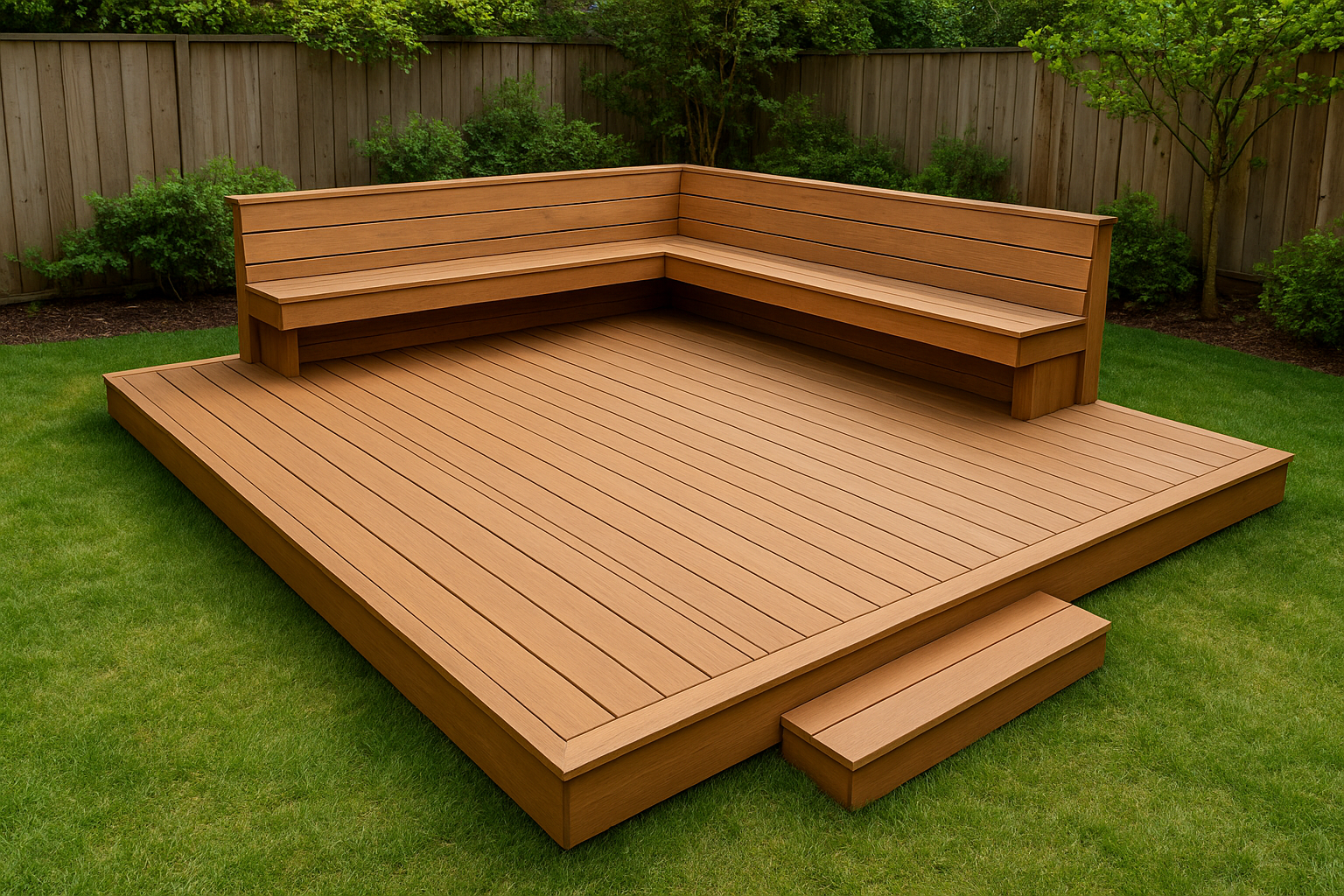
A ground-level platform deck is one of the most practical home depot deck design ideas you can pursue, especially if your yard is flat. It sits close to the ground, typically under 30 inches high, which means many jurisdictions skip the permit requirement and the framing stays simple without complex footings.
Choose the right size and shape for your yard
Start by measuring the space you have and consider how you’ll use it day to day. A rectangular layout keeps material calculations simple and works well in most yards, while an L-shape can define a more distinct outdoor area. Make sure you have enough room for furniture without crowding the edges before finalizing your dimensions.
Pick decking materials that match your upkeep goals
Home Depot carries both pressure-treated lumber and composite decking boards, each with real tradeoffs. Pressure-treated wood costs less upfront but needs regular staining or sealing over time. Composite boards cost more initially but resist moisture, fading, and splintering with minimal maintenance, which matters in a wet climate like Western Washington.
Choosing the wrong material early is one of the most common ways a deck project runs over budget within the first few years.
Add clean borders, steps, and built-in seating
Finishing details turn a plain platform into a space that feels considered. Fascia boards along the perimeter hide the framing and create a clean edge. Wide steps and a section of built-in bench seating along one side add function without a major budget increase.
3. Create a detached floating deck zone
A detached floating deck sits away from the house as a standalone structure, which gives you far more flexibility in where you put it. This approach works well when you want to separate a lounge or garden area from the main traffic zone near your back door, and it’s one of the more versatile home depot deck design ideas for larger yards.
Place the deck for sun, privacy, and views
Before you commit to a location, spend time in your yard at different points in the day. You want to understand where direct sun hits in the afternoon and where natural shade falls. A spot that feels perfect in the morning can turn into an oven by 3 p.m., so choosing a location with partial shade or a good orientation makes a real difference in how often you’ll actually use the space.
Placement is the one decision you cannot undo once the footings are set, so take the time to get it right.
Connect it with pavers, gravel, or stepping stones
A detached deck needs a clear path from the house to feel intentional rather than isolated. Gravel paths are affordable and drain well, while concrete pavers offer a more finished look and hold up to heavy foot traffic over time.
Plan for stable footings and good drainage
Even a low floating deck needs solid footing blocks or concrete piers to stay level over time. Make sure the ground beneath slopes away from the deck frame to prevent standing water from rotting the framing before its time.
4. Add a raised deck with storage below
A raised deck gives you elevated outdoor living space and a practical void beneath the structure. This approach works especially well on sloped lots or homes with a high first-floor entry, where the deck sits three or more feet above grade. It’s also one of the more functional home depot deck design ideas for getting double use out of a single footprint.
Design stairs and railings that feel safe and roomy
Your stairs and railings set the tone for how the whole deck feels to use. Wide treads and a comfortable rise make climbing easier and more natural, especially for kids and older family members. Most building codes require railings on any deck over 30 inches off the ground, so factor that into your design before framing starts.
Getting stair width and railing height right during planning is far easier than retrofitting them once the frame is built.
Decide how you will use the space under the deck
The area beneath a raised deck is too valuable to waste. You can enclose it with lattice panels or composite skirting to create covered storage for tools, equipment, or firewood.
If you want more than storage, a gravel base with proper drainage can turn that space into a dry covered patio you use even during light rain.
Protect framing from water to extend deck life
Pacific Northwest moisture will find every gap in your framing if you let it. Joist tape on top of each framing member keeps water off the wood and reduces rot risk before it starts.
Pair that with proper ledger flashing where the deck attaches to your house, and you protect both the deck framing and your home’s exterior sheathing at the same time.
5. Design a side-yard deck for small spaces
Side yards get overlooked in most outdoor planning conversations, but they rank among the most underused home depot deck design ideas worth taking seriously. A narrow side yard can become a functional deck with the right layout approach, giving you usable outdoor square footage without touching your main backyard at all.
Use slim layouts that still feel comfortable
A side-yard deck works best when you keep the layout tight and purposeful. Aim for at least six feet of width so you can fit a small bistro table or a pair of chairs without feeling cramped. Longer rectangular configurations that run the length of your home tend to feel more open than short, boxy layouts in tight spaces.
Keeping the shape simple also reduces material waste and cutting time, which matters when you’re working with limited square footage and a fixed budget.
Add privacy with screens, fencing, and planters
Privacy becomes a priority when your deck sits close to a neighboring property or a public walkway. A row of vertical cedar screens or composite privacy panels along one side blocks sightlines without making the space feel enclosed. Adding deep planters with tall ornamental grasses softens the structure and brings life to the perimeter.
A well-placed planter row does more privacy work per dollar than almost any other side-yard addition.
Build in lighting for safer nighttime use
Side yards receive less ambient light than main outdoor areas, so built-in lighting matters more here than anywhere else on your property. Low-voltage post lights and step lights make the space safe after dark and extend the hours you actually use it.
Running wiring during the build is far easier than retrofitting it later, so plan your lighting layout before framing starts.
6. Make a multi-use deck for dining and lounging
A multi-use deck is one of the most practical home depot deck design ideas for homeowners who want a single outdoor space that handles multiple functions without feeling cluttered. The key is treating each activity as its own zone during the planning phase rather than trying to figure it out once furniture arrives.
Zone the deck for cooking, eating, and relaxing
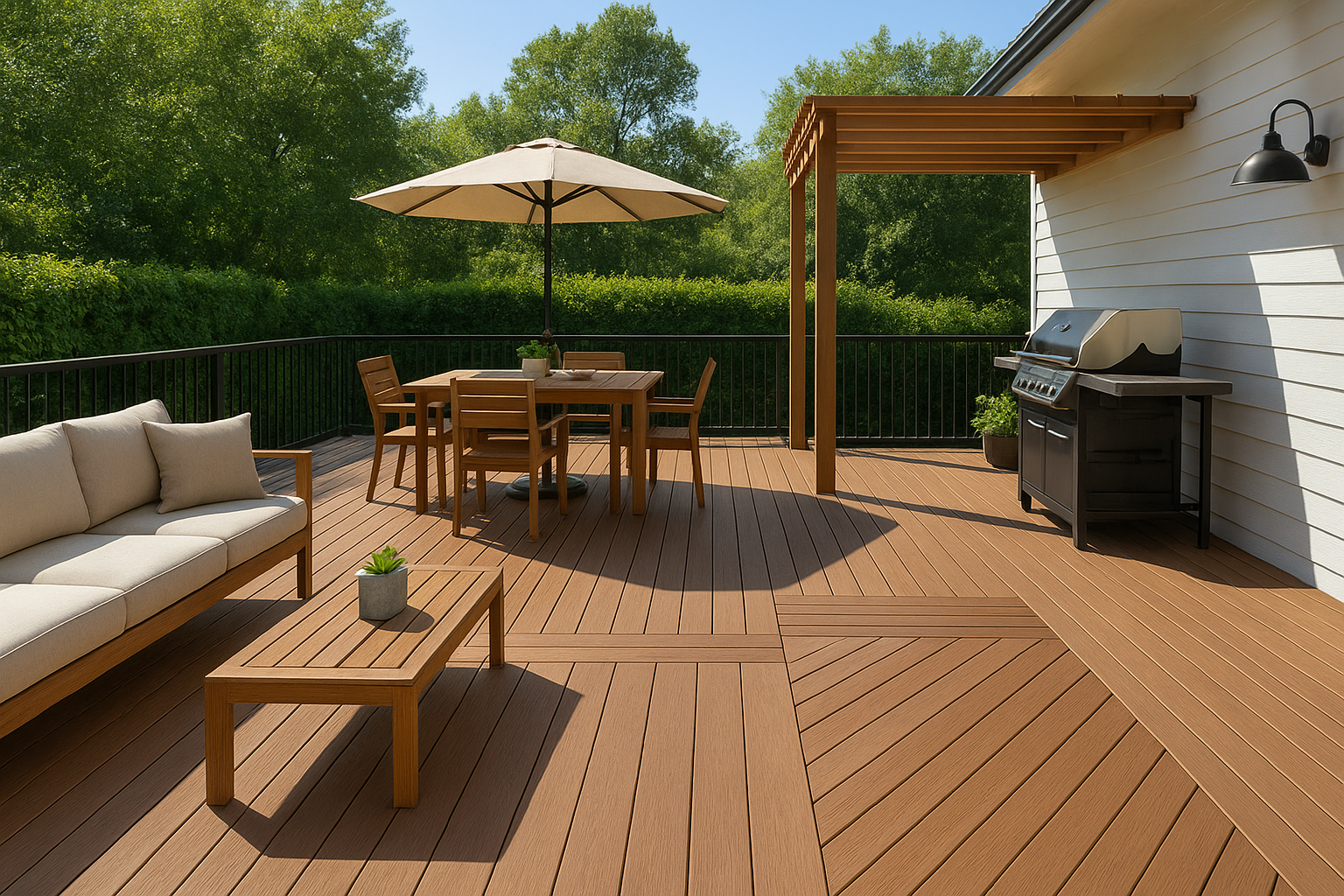
Break your deck into clear sections based on how you plan to use it. A grilling and prep area near the house works well for gas line or electrical access, while a dining zone sits slightly apart to keep smoke away from the table. A lounge section with low seating can anchor the far end and give the space a natural sense of depth and flow.
How you divide the deck determines how useful it actually becomes once you’re living in it day to day.
Use deck board patterns to define each zone
You do not need walls or barriers to separate zones visually. Alternating board directions, such as running boards horizontally in the dining area and diagonally in the lounge section, creates a clear visual boundary without blocking sight lines or adding bulk.
Plan shade, power, and lighting before you build
Overhead shade structures and electrical outlets are far easier to integrate during the build than to add after the fact. Decide where you want a pergola or shade sail, identify your outlet locations, and route conduit through the framing while the deck is still open.
Bring your deck plan to life
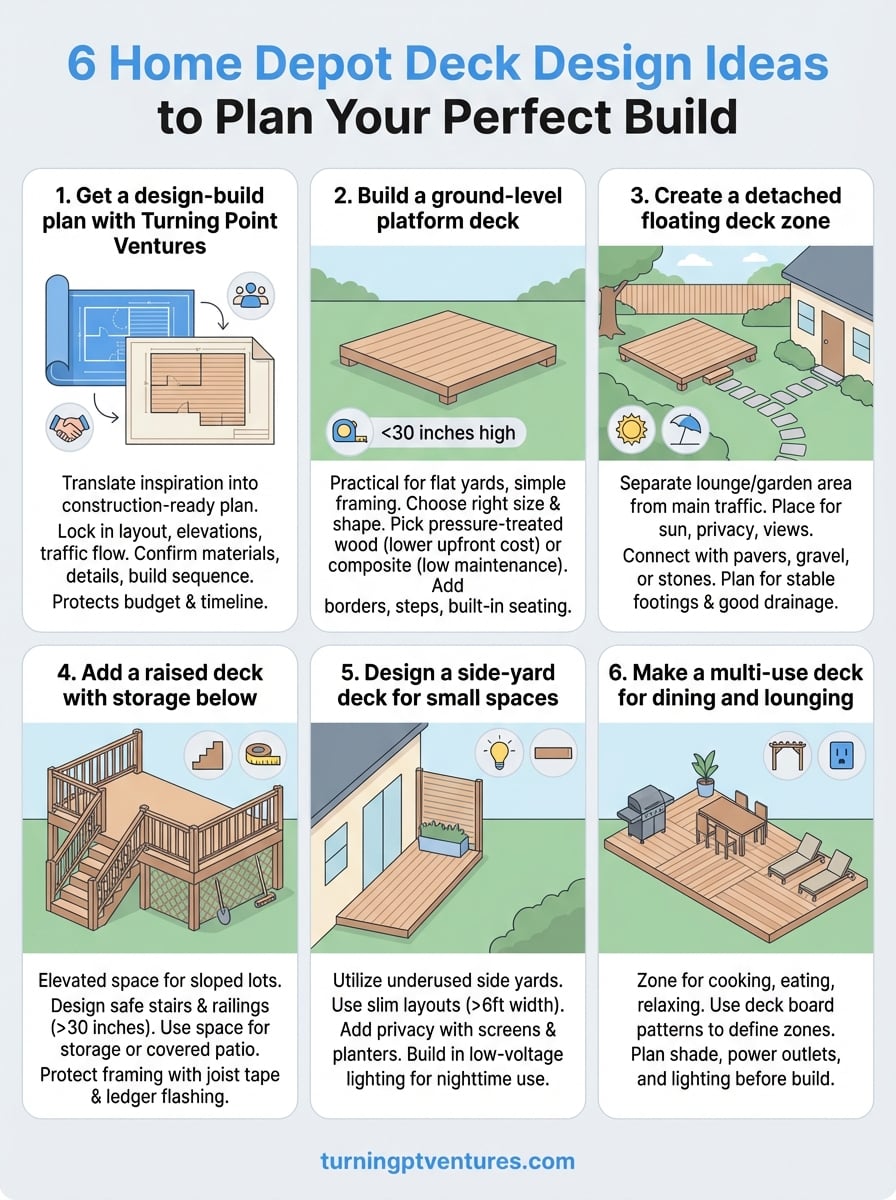
These six home depot deck design ideas give you a solid range of outdoor living options, from a simple ground-level platform to a fully zoned multi-use space. Each one gives you a clear starting point and a focused set of decisions to work through before you commit to a budget or purchase a single material.
Good design work done early prevents the costly surprises that slow most builds down. Turning Point Ventures works with homeowners across Western Washington to turn raw inspiration into a detailed, construction-ready plan with confirmed dimensions, material selections, and a realistic build timeline. We manage every phase from design through final walkthrough, so you stay focused on your life instead of chasing subcontractors and permits. When you’re ready to stop browsing and start building, connect with our team and get your project moving forward.


0 Comments